In short
You usually charge at home overnight, with a wallbox: a fixed charger on the wall. That is enough for most daily trips. A 3.7 or 7.4 kW wallbox is enough for most homes. Have an installer fit and inspect the wallbox, and register it with Fluvius. Avoid charging while you cook: a high peak makes your grid costs more expensive. Ask Energiehuis Limburg whether a grant exists for a home charge point.
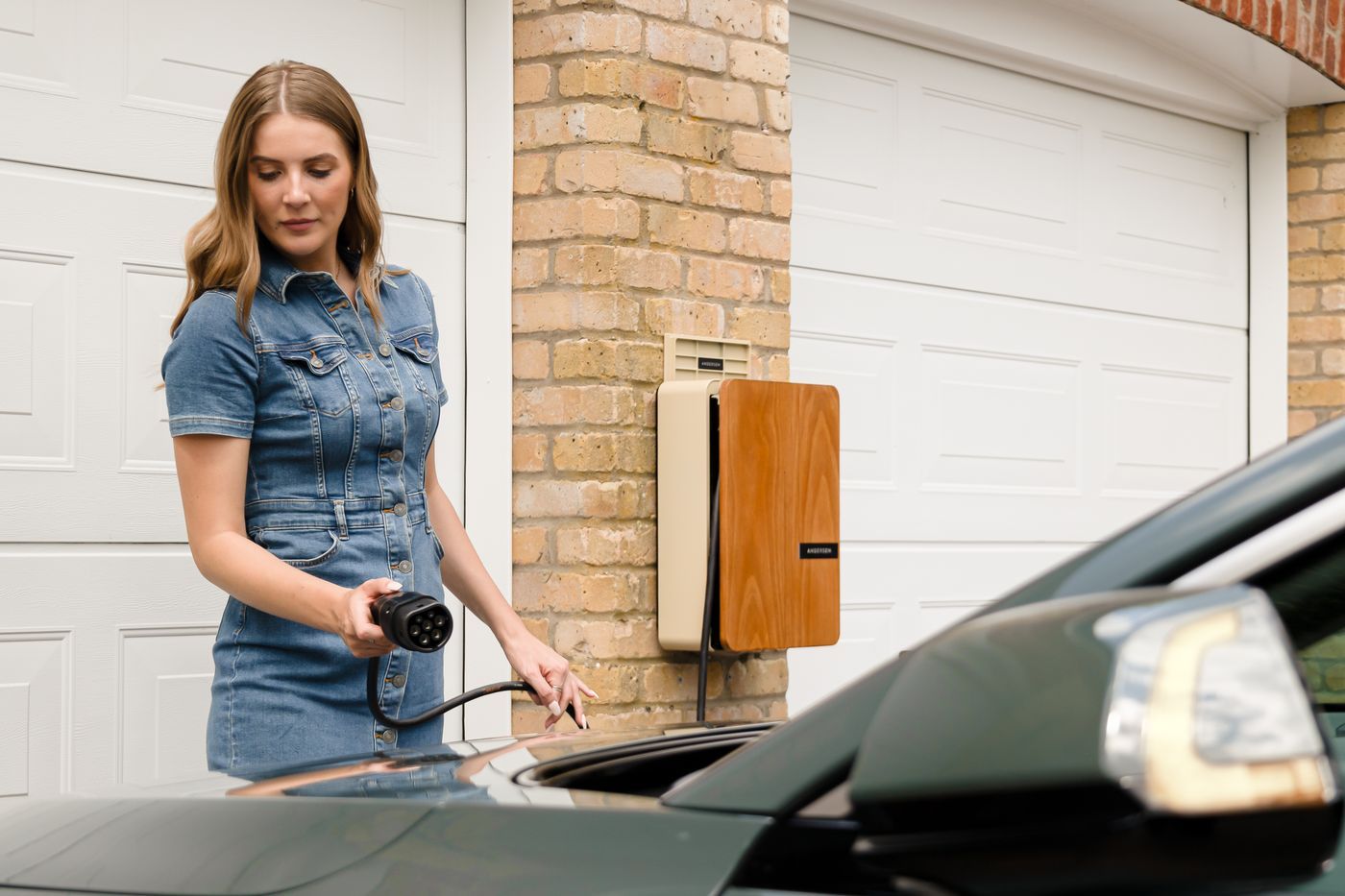
How long does charging take?
An electric car stores electricity in a battery. You measure the amount in kWh, just as on your energy bill. How fast the battery fills depends on the charging power in kW. Think of a tap and a bathtub: kW is how far the tap is open, kWh is how much water the bathtub holds. A tap opened wider fills the bathtub faster, but does not make it bigger.
Kilowatts and kilowatt-hours: think of a bathtub
The tap is the power in kW, the bathtub is the capacity in kWh and the water level is how full the battery is.
- Tap: kilowatt (kW)
- The charging power. How much energy flows in per hour.
- Bathtub: kilowatt-hour (kWh)
- The capacity. How much energy fits in the battery.
- Water level
- How full the battery is right now.
Charging time in hours = kWh ÷ kW
Worked example (illustration)
An empty battery of 74 kWh, charged at a constant power.
- 7.4 kW wallbox74 kWh ÷ 7.4 kW = 10 hours
- 3.7 kW wallbox74 kWh ÷ 3.7 kW = 20 hours
Our own diagram, drawn to explain, without measured data.
Show the figures as a table
| Power (kW) | Battery (kWh) | Charging time (h) |
|---|---|---|
| 7.4 | 74 | 10 |
| 3.7 | 74 | 20 |
An example: you want to add 74 kWh. That is a large battery, from empty to full.
| Charging power | When | Time for 74 kWh |
|---|---|---|
| 2.3 kW | ordinary socket | about 32 hours |
| 3.7 kW | wallbox, single phase | about 20 hours |
| 7.4 kW | wallbox, single phase | about 10 hours |
| 11 kW | wallbox, three phase | about 6.7 hours |
In practice it takes a little longer, because some electricity is lost.
You rarely need that much. An electric car uses roughly 15 to 20 kWh per 100 km, more in winter. If you drive 50 km a day, you add about 8 to 10 kWh a day. At 3.7 kW that takes about three hours. Your car stands still for eight hours or more at night, so you do not need a fast charger.
Wallbox or socket?
An ordinary socket is not made to deliver a lot of current for hours on end. The plug and cable can get hot. Use it only in an emergency, and never with an extension lead.
A wallbox is built for the job. It has its own cable to your meter cupboard and its own protection. The wallbox talks to the car and decides how much current may flow. Usually you set a maximum yourself.
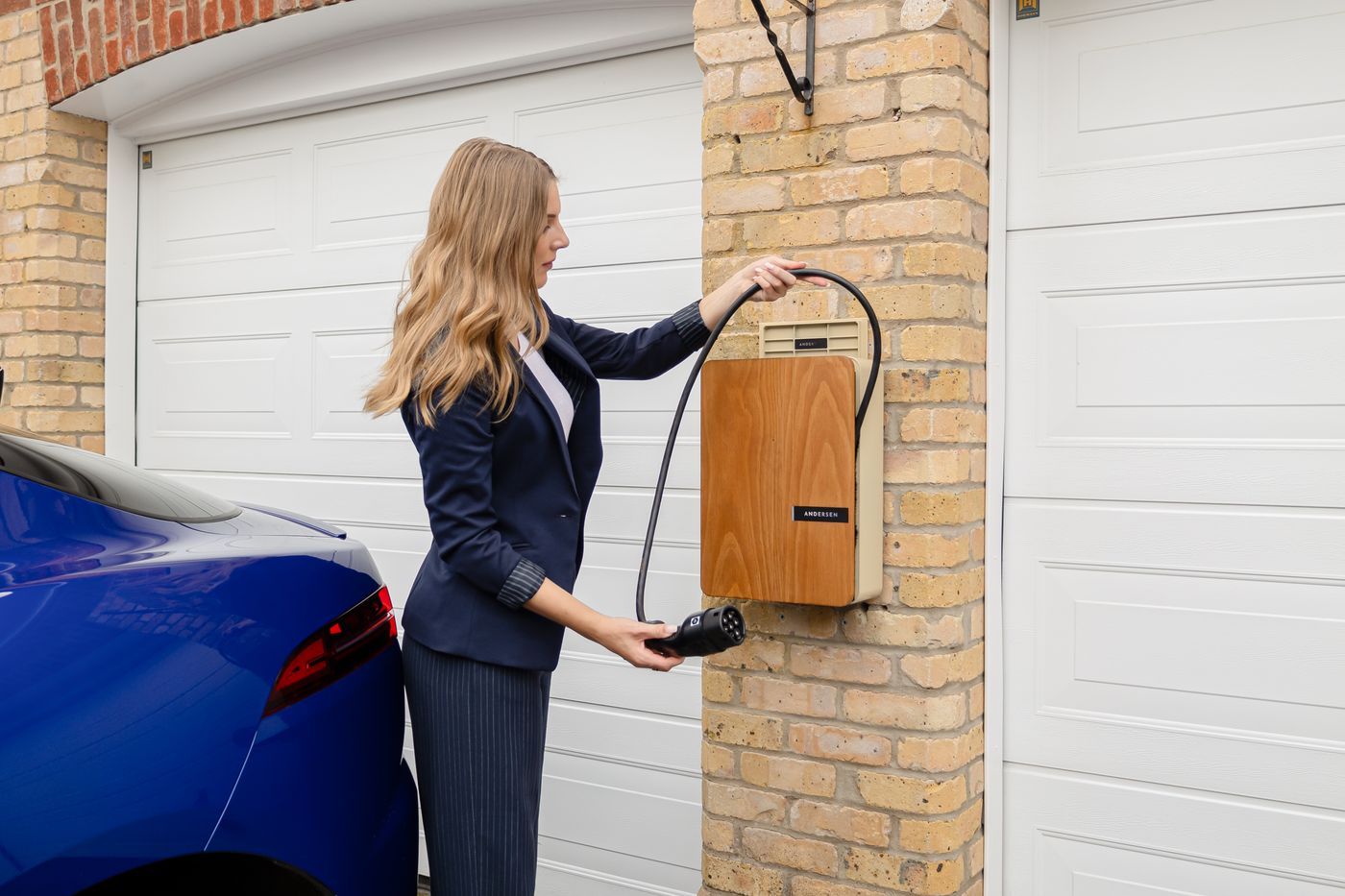
How much power you can use at home depends on your connection:
- With a single-phase connection (monophase) you charge at up to 7.4 kW.
- With a three-phase connection you charge at up to 11 kW.
When an electrician visits your meter cupboard, they can see which connection you have. They also check whether your fuse board can take a wallbox. Do this before you buy a wallbox, because a box that is too powerful on an installation that is too light causes problems.
A more powerful box is therefore rarely better. For daily use 11 kW is usually more than you need, and it makes your peaks bigger (see below).
What you need to arrange
- An installer. Have a recognised installer fit the wallbox. Ask who arranges the inspection: a new fixed installation must be inspected under the AREI (the Belgian General Regulation on Electrical Installations). Also ask whether the inspection is included in the quote.
- Registering with Fluvius. Since June 2021 you must register a private charge point of 5 kVA or more on the low-voltage grid with Fluvius, the grid operator. You do this in Mijn Fluvius (your Fluvius customer account) under "Laadpaal melden" (report a charge point). You need your EAN number (the code of your meter) and the installer's details. An ordinary charging cable that you plug into a socket usually does not need to be reported.
- Permission, if you rent or live in a flat. Tenants need written permission from the owner for fixed cabling. Also agree who pays and what happens when you leave. In a block of flats, the owners' association decides. Start the conversation early, because shared charge points need preparatory study.
- A place for the car. If you have no driveway, garage or fixed parking space of your own, charging at home is not possible. Then do not buy a wallbox "for later". You will charge at work or at public charge points, and those kWh cost more than at home.
On a driveway, the charge point must be weatherproof and the cable must not trip anyone. In a garage, discuss fire safety with the installer. Is a plug or cable hot, or damaged? Stop charging and have the installation checked.
Why your peak counts: the capacity tariff
Since 2023, part of your grid costs depends on your highest consumption peak. This is the capacity tariff (capaciteitstarief). Your digital meter measures every quarter of an hour how much electricity you draw. Each month, the heaviest quarter of an hour counts. Fluvius calculates your tariff on the average of your monthly peaks over the last twelve months.
At Fluvius Limburg this tariff is about €49 per kW per year in 2026, excluding VAT. According to the Flemish Utilities Regulator (Vlaamse Nutsregulator), the Flemish average is around €53. Everyone pays at least the amount for a peak of 2.5 kW. The average Flemish household reaches about 4.2 kW.
An electric car makes that peak rise quickly. An example:
- Your home draws 4 kW on a busy evening (oven, hob, washing machine).
- You charge at the same time at 7.4 kW. Your peak then reaches about 11 kW.
- If this happens every month, your peak is 7 kW higher and in Limburg you pay about 7 × 49 = €343 more per year, excluding VAT.
- If you charge only at night at 3.7 kW, with the oven off, your peak stays about the same.
One bad month weighs less, because it is an average over twelve months. So the rule is simple: do not charge while you cook and other heavy appliances are running.
Do you want the wallbox to watch this for you? Then ask about load balancing. The wallbox measures what the house already uses and charges more slowly when you get close to your limit. Before you sign, ask the installer to explain how you set that limit.
Solar panels and smart charging
If you have solar panels, it pays to charge the car with your own electricity. Electricity you feed into the grid earns less than electricity from the grid costs you. The car must then be at home when the sun shines. If you work away from home in the day, you will still charge mostly at night with grid electricity. Some wallboxes follow your panels. That helps mainly people who are at home during the day. In winter, panels make much less electricity, so do not count on them then.
If you have a day and night tariff or a dynamic contract, electricity is often cheaper at night. Set the wallbox or the car to a charging window after midnight. In the first weeks, check in Mijn Fluvius whether your monthly peak turns out well. Cheap kWh and a low peak are two different things: you can get one without the other.
What does charging cost?
A worked example. Your car uses 18 kWh per 100 km and you pay €0.30 per kWh. Then 100 km costs about €5.40 in electricity. Take your own tariff from your bill to find your own figure.
On the road you often pay more per kWh, especially at fast chargers. So look not only at the price on the charge point, but also at the start fee.
Charging on the road and the charge card
At a public charge point you start with a charge card or an app. It identifies you and handles payment. Afterwards you get an invoice from the operator, the company that runs the charge point. At home you do not need a charge card: most wallboxes start with an app or a key fob, or are always on.

No single card works at all charge points. Look at where you usually drive and choose the card that works there. Compare the price per kWh, the start fee and any subscription. Take your charging cable on trips, and before you leave, check which operators are along your route.
Support and grants
As far as we know, there is no general Flemish grant for a private home charge point. Some municipalities do give support. Ask at the woonenergieloket (local housing and energy desk) or the municipal service, or search the Premiezoeker (the grants search) of the Flemish government. Work out your plans without a grant. Then any support is a bonus.
Also count the extra costs: cabling, any change to the fuse board and the inspection. Ask for these separately in your quote.
Before you sign
Ask two or three installers for a quote. Bring a photo of your meter cupboard and say how many kilometres you drive and when the car is at home. Also say whether you have or plan solar panels, a heat pump or a home battery. Then ask each of them:
- What power do they recommend, and why?
- Does the fuse board need upgrading?
- Is the inspection included in the price, and who registers the charge point with Fluvius?
- Does the wallbox have load balancing, and how do you set that limit?
- What happens if the box stops working after a year?
Write down the answers. Every quote should come with a clear diagram of the installation.
What now?
- For a week, note how many kilometres you drive and when the car stands still.
- Ask an electrician to check your meter cupboard.
- Do you heat with gas or oil and want to know first what pays off best in your home? Ask for free advice from Energiehuis Limburg (desk in your municipality, telephone 089 77 81 29).
Sources and disclaimer
This article is based on the explanation of the capacity tariff from the Flemish Utilities Regulator (Vlaamse Nutsregulator), on the Fluvius page on reporting a charge point and on the website of Energiehuis Limburg. The Limburg tariff of about €49 per kW comes from the Fluvius Limburg tariff list for 2026.
Disclaimer: This is general information, not personal advice and not a quote. Tariffs, grants and rules change. As of 30 October 2026.
Author: Wouter Hermans
Stay up to date with Bronsgroen
Once a month, news about our projects in Limburg, our activities and how you can take part. You can unsubscribe at any time.