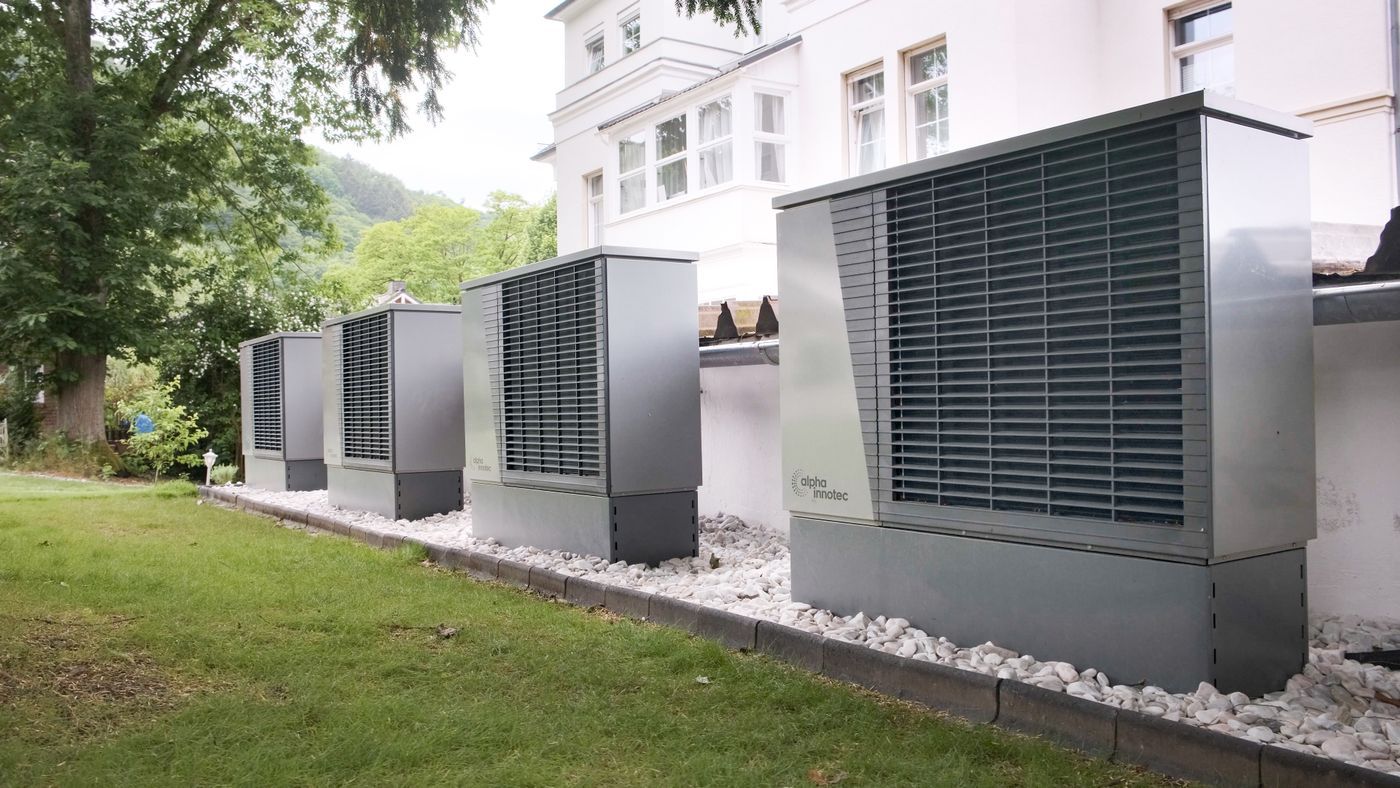
In short
A heat pump takes heat from the outside air (or from the ground) and brings it indoors. For 1 kWh of electricity it delivers about 3 kWh of heat in practice. There are four types. Air-to-air is cheap and heats a few rooms. Air-to-water replaces your boiler. Geothermal is the most efficient but the most expensive. Hybrid works together with a gas boiler. At the energy prices of October 2026, a heat pump mainly pays back when three things come together: your gas boiler is due for replacement, your home is well insulated and you get a high grant. So insulate first and check your radiators. You can apply for Mijn VerbouwPremie (the Flemish renovation grant) for a heat pump until 31 December 2027, inclusive.
What you hear: what is true?
| What you hear | Is it true? | Why |
|---|---|---|
| "A heat pump only works with underfloor heating." | False | According to Warmtepompklaar, "quite a few older homes with radiators" are already ready for a heat pump. Often it is enough to replace the radiators in the coldest rooms. |
| "A heat pump always pays for itself." | It depends | In our worked example it takes 9 years in the best case and longer than the life of the pump in the worst. Insulation, grant and timing (your boiler is due for replacement anyway) make the difference. |
| "Air-to-air is just an air conditioner." | Not quite | It is the same kind of device, but with a good winter efficiency it is a full heating system for the rooms where it hangs. It makes no hot water and heats no radiators. |
How does a heat pump work?
You heat with gas or heating oil (mazout) today. A heat pump replaces the boiler with a device that runs on electricity. That raises questions. How can a device take heat from cold air? Is my home suitable? What does it cost, and what do I get back?
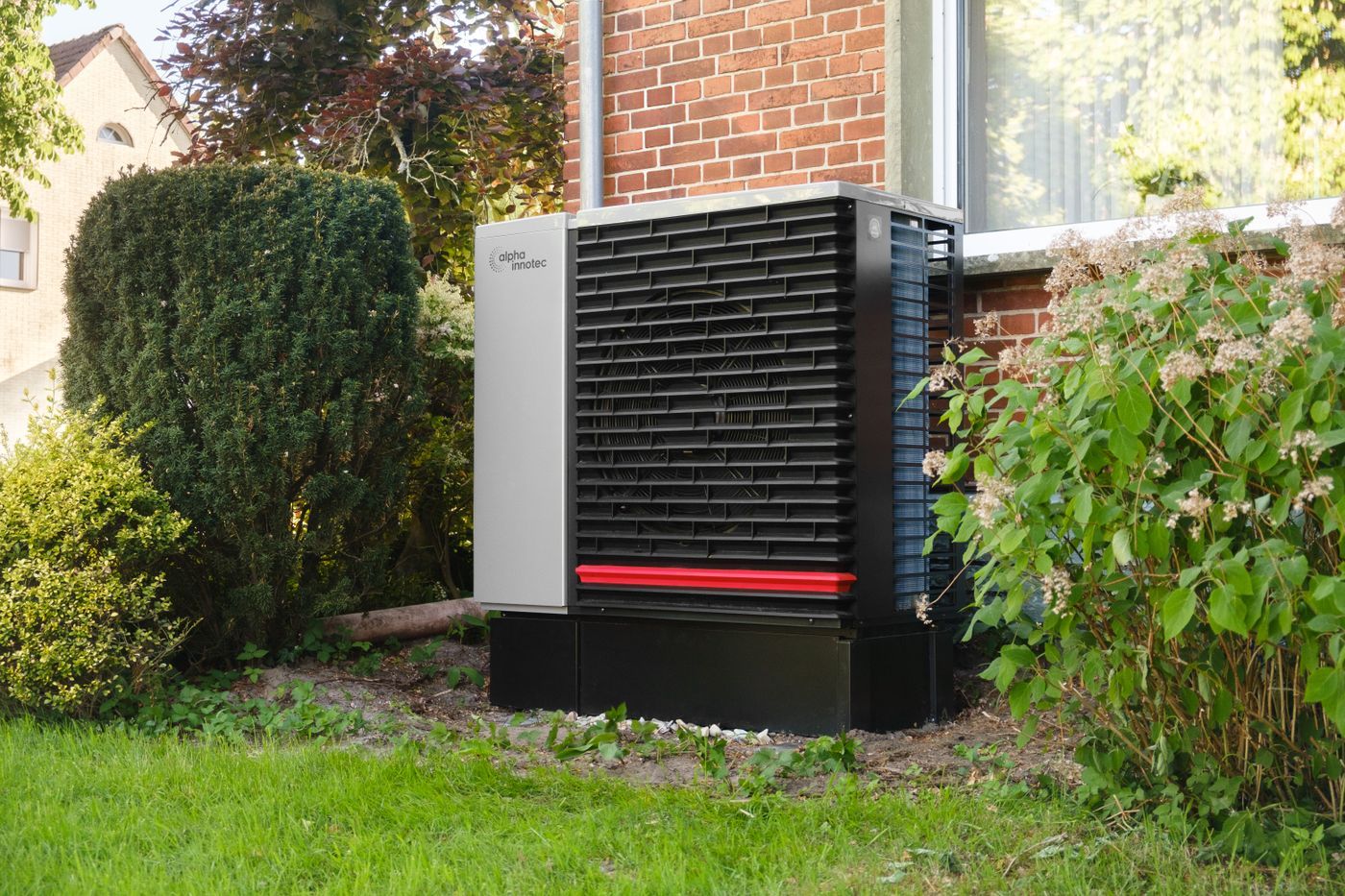
Cold air also contains heat. Only at -273 °C is there no heat left at all. Air at -5 °C feels cold, but it still holds a lot of energy.
A heat pump works like a fridge running in reverse. A fridge takes heat from its inside and gives it off at the back, in the kitchen. A heat pump takes heat from outside and gives it off in your home.
This is how it goes:
- The device contains a refrigerant. It is made colder than the outside air. Heat then flows from the air into the refrigerant.
- A compressor squeezes the refrigerant. This uses electricity. The refrigerant gets hot, like a bicycle pump warms up when you pump hard.
- The hot refrigerant gives its heat to the water in your central heating. Then the cycle starts again.
So the electricity is mostly used to move heat, not to make it. That is why the pump delivers more heat than the electricity it uses. For each kilowatt hour (kWh, the unit on your bill) you get about 3 kWh of heat. This figure is the seasonal efficiency. In field trials it lies between 2.8 (the median of the UK Electrification of Heat trial) and 3.4 (the average of 61 installations in Germany, Fraunhofer ISE). The weakest German installation reached 2.6. On paper the figures are higher: Test-Aankoop gives 4 to 4.5 with water at 35 °C. Such a figure is called the SCOP and is calculated from laboratory measurements. Measured in a real home, it is called the SPF. If you need water at 55 °C, as in a poorly insulated house, Test-Aankoop gives about 3 to 3.5. An electric heater delivers 1 kWh of heat per kWh of electricity.
The efficiency depends on two things. The colder it is outside, the harder the pump works. And the hotter the water has to be, the less the pump delivers. That is why the way heat is given off in your home matters so much (see below).
Is your home ready?
A heat pump heats at lower temperatures than a boiler. A gas boiler often heats the water to 60 °C or more. A heat pump works best with water at about 35 to 45 °C. Then it uses the least electricity.
So ask yourself two questions: does your home keep its heat, and do your radiators give enough heat on lukewarm water?
1. Does your home keep its heat?
If your home loses a lot of heat, the pump has to run for a long time and you pay a lot for electricity. Insulate first what leaks the most. In older homes that is usually the roof, because warm air rises. Windows, walls and floor come next.
The EPC (energy performance certificate) of your home and your heating bills from the last few years give a first picture.
2. Do your radiators give enough heat?
With underfloor heating this is seldom a problem. With radiators it depends on their size. Small, old radiators need hot water. Larger ones give enough heat even on lukewarm water.
Often it is enough to replace the radiators in the coldest rooms with larger ones. So your home does not need a full rebuild. The government tool Warmtepompklaar ("heat pump ready") gives a first indication. According to that site, "quite a few older homes with radiators" are already ready for a heat pump. The tool does not replace a calculation by an installer.
Mijn VerbouwPremie has a hard limit: the system may heat the water to 55 °C at most.
Which type of heat pump?
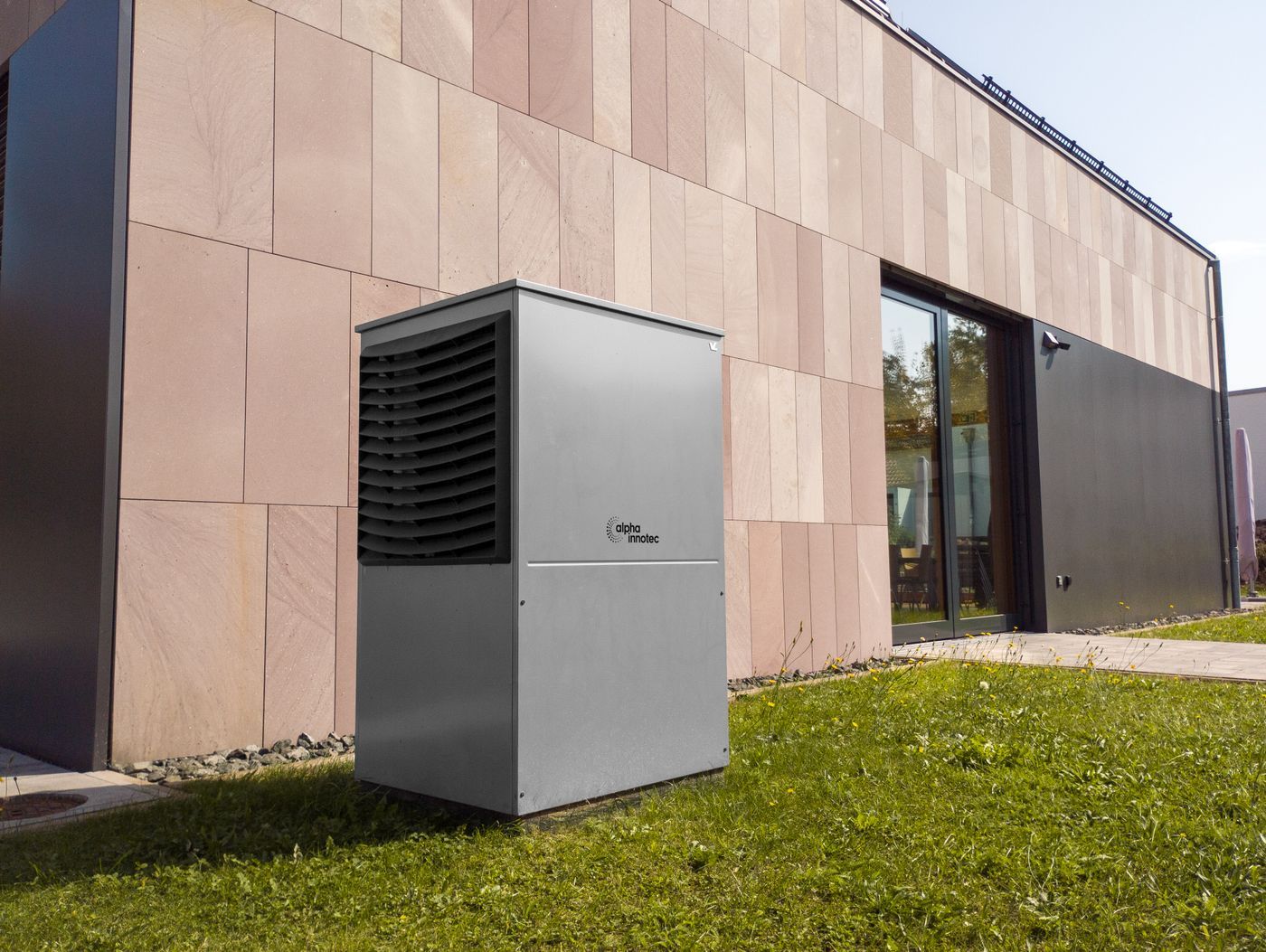
The type sets where the heat comes from (air or ground) and where it goes (air in the room or water in the radiators).
Air-to-air
An outdoor unit takes heat from the air. An indoor unit on the wall blows warm air into the room. It is the same kind of device as an air conditioner, and it can also cool in summer.
- Good for: the living room, an extension or a home without central heating. Often next to an existing boiler, which then has to run less.
- Limit: it heats only the rooms with an indoor unit. It does not make hot water.
- Price: €1,500 to €3,000 per device, fitting included (Test-Aankoop, January 2026).
- Grant: small (€300 to €600). A device that also actively cools gets a grant only if it is the only central heating and the home no longer uses gas or heating oil.
Air-to-water
An outdoor unit takes heat from the air and heats the water for your radiators or underfloor heating. It usually also makes your hot water, with a boiler. This is the usual choice to replace a gas or oil boiler completely.
- Good for: a home that keeps its heat well, with radiators that give enough heat on lukewarm water.
- Efficiency: about 3 in field trials, up to 3.5 in a well-insulated home with underfloor heating.
- Price: €10,000 to €32,000, fitting included (Test-Aankoop, November 2025). The CREG (the federal energy regulator) used €14,210 for a 7 kW device. New radiators come on top.
Geothermal (ground-to-water)
The heat comes from the ground, through a borehole tens of metres deep or through pipes under the lawn. The ground stays about equally warm all year. So this type reaches the highest efficiency, also in a frost. It is also the quietest, because no fan hangs outside. In summer it can cool a little at almost no cost with the cool ground water.
- Good for: a new build or a deep renovation, with room for a borehole.
- Efficiency: up to 4.3 with water at 55 °C and up to 5 at 35 °C (laboratory values, Test-Aankoop).
- Price: €18,000 to €32,000, fitting included (Test-Aankoop, December 2025). A borehole alone costs €5,500 or twice that.
Hybrid
A small air-to-water pump works together with a gas condensing boiler. The pump does the work as long as it is not too cold outside. In a frost, or when you need a lot of hot water, the boiler steps in.
- Good for: a home that is not ready yet for a full heat pump, as a halfway step.
- How much does the pump do? According to a study for the Flemish Energy and Climate Agency (VEKA), in a reasonably insulated home it delivers more than 80% of the heat, if electricity costs 2.5 times as much as gas per kWh. If electricity costs 3.5 times as much, that drops below 50%. Today electricity costs about 3 times as much.
- Price: €4,500 to €7,000 excl. VAT for a 4 kW pump, without fitting (Test-Aankoop).
- Drawback: you keep a gas connection, with its fixed costs and the maintenance of two devices.
Heat pump water heater
This device heats only your domestic hot water. It replaces an electric boiler, not your heating.
The four side by side
| Air-to-air | Air-to-water | Geothermal | Hybrid | |
|---|---|---|---|---|
| Heats | a few rooms | the whole home | the whole home | the whole home, together with gas |
| Hot water | no | yes | yes | yes |
| Cooling | yes | sometimes | yes, efficient | sometimes |
| Efficiency | 3 to 4 | about 3 | about 4 | about 3 |
| Price with fitting | €1,500 to €3,000 | €10,000 to €32,000 | €18,000 to €32,000 | about €8,000 |
| Grant (cat. 1 and 2 to cat. 4) | €300 to €600 | €1,500 to €6,000 | €4,000 to €8,000 | €800 to €4,000 |
| Gas connection needed | yes, for the rest of the home | no | no | yes |
The efficiency in the table is a round value for an ordinary home, not a laboratory value. For hybrid and air-to-air, the price is our own estimate, based on the Test-Aankoop prices. For all types, a good installer looks at the heat loss of your home and chooses the output from that. A pump that is too small leaves you cold in a frost. A pump that is too large switches on and off all the time. That is neither economical nor quiet.
And hydrogen? A hydrogen boiler is not an alternative for a home. You can read why in the article "Hydrogen: where does it make sense and where not?".
What does it cost per year, and when does it pay back?
A heat pump costs more to buy and less per year. Whether that pays off depends on the price of electricity against gas. In October 2026 an extra kWh of electricity cost about three times as much as a kWh of gas. A heat pump with an efficiency of 3 delivers three times as much heat per kWh of electricity. So the saving stays small, unless the efficiency is higher.
The worked example
We use a semi-detached home of 125 m², moderately insulated, with four residents. The example comes from Selectra, with the prices of 21 October 2026:
- The home now uses 17,000 kWh of gas per year. The boiler gets 92% out of that, so the home needs 15,640 kWh of heat.
- Gas costs €2,020 per year all-in. About €182 of that is fixed costs, which drop away if you have the gas cut off.
- An extra kWh of electricity costs €0.329, an extra kWh of gas €0.108.
- The heat pump raises your peak use and so your capaciteitstarief. We use €49 per kW per year (Fluvius Limburg): 2 kW extra for a full heat pump, 1.5 kW for hybrid and 1 kW for air-to-air.
- For air-to-air we assume the device delivers 40% of the heat, in the living room. The existing boiler does the rest.
- For hybrid we assume the pump delivers 75% of the heat, with an efficiency of 3.2.
Your current boiler
| Boiler (today) | Yearly cost |
|---|---|
| Gas boiler | €2,020 |
| Heating oil boiler | €2,453 |
| Wood pellet boiler (fuel only) | €1,694 |
For heating oil we use €2,453 per year for the same home, with no fixed costs. With air-to-air and hybrid, the existing boiler still supplies part of the heat.
For wood pellets we use the same heat demand of 15,640 kWh:
- 1 kg of wood pellets contains 4.8 kWh, according to the specifications of the Walloon government.
- We assume a boiler efficiency of 90%. This is a rounded calculation value, not a measured seasonal efficiency and not a guarantee. Test-Achats wrote on 17 October 2024 that most pellet boilers reach at least 89%.
- The use is then 15,640 / (4.8 × 0.90) = about 3,620 kg, or about 3.62 tonnes per year.
- As the price we use €7.02 per 15 kg bag, or €0.468 per kg. This is the Walloon average for October 2026 according to Valbiom, as reported by CallMePower, a commercial comparison site (updated 29 October 2026). It applies to pellets with a DIN+ or EN+ label, for purchases of at least one pallet. It is a Walloon average price, not a national price and not a quote.
- This puts the fuel at about €1,694 per year.
That €1,694 is not an all-in amount. It excludes delivery, and also the maintenance and the electricity used by the pellet boiler itself.
Air-to-air and hybrid keep the existing boiler, which still supplies part of the heat. So their yearly cost depends on the fuel you burn today. A full heat pump (air-to-water or geothermal) replaces the boiler completely. So its yearly cost is the same, whatever fuel it replaces.
Against gas
| Yearly cost | Saving against gas | |
|---|---|---|
| Air-to-air, efficiency 4 (good device), plus existing boiler | €1,848 | €172 |
| Air-to-water, efficiency 3 | €1,813 | €207 |
| Air-to-water, efficiency 3.5 (well insulated) | €1,568 | €452 |
| Geothermal, efficiency 4 | €1,384 | €636 |
| Hybrid (heat pump plus existing boiler) | €1,921 | €99 |
Against heating oil
| Yearly cost | Saving against heating oil | |
|---|---|---|
| Air-to-air, efficiency 4 (good device), plus existing boiler | €2,035 | €418 |
| Air-to-water, efficiency 3 | €1,813 | €640 |
| Air-to-water, efficiency 3.5 (well insulated) | €1,568 | €885 |
| Geothermal, efficiency 4 | €1,384 | €1,069 |
| Hybrid (heat pump plus existing boiler) | €1,893 | €560 |
Against wood pellets
Here we compare only full heat pumps, which replace the pellet boiler completely. We do not calculate air-to-air or hybrid with a pellet boiler.
| Yearly cost | Saving against wood pellets | |
|---|---|---|
| Air-to-water, efficiency 3 | €1,813 | none: €119 more |
| Air-to-water, efficiency 3.5 (well insulated) | €1,568 | €126 |
| Geothermal, efficiency 4 | €1,384 | €310 |
So in this example an air-to-water pump with efficiency 3 costs €119 per year more than the wood pellets. It saves nothing. At efficiency 3.5 it saves €126 per year, geothermal €310. Keep in mind that delivery, maintenance and the electricity of the pellet boiler are not in this comparison.
The yearly cost covers only energy and the capaciteitstarief. Maintenance is not included. A heat pump and a gas boiler both need a service visit.
Payback time
The payback time is the price after grant, divided by the saving per year. It depends strongly on the moment.
- Your gas boiler has to be replaced anyway. Then only the extra cost of the heat pump over a new gas boiler counts. A new gas condensing boiler costs about €2,500 to €5,000 fitted. We use €4,000. Since 29 July 2025 you pay 21% VAT on it, also in an older home.
- Your gas boiler still works well. Then the full price counts, and payback takes much longer.
Payback time if your gas boiler has to be replaced anyway, with the grant by income category:
| Price (assumed) | Cat. 1 and 2 | Cat. 3 | Cat. 4 | |
|---|---|---|---|---|
| Air-to-water, efficiency 3 | €14,000 | 41 years | 27 years | 19 years |
| Air-to-water, efficiency 3.5 | €14,000 | 19 years | 12 years | 9 years |
| Geothermal, efficiency 4 | €25,000 | 27 years | 24 years | 20 years |
For air-to-air and hybrid, replacing the boiler changes nothing, because you still need the gas boiler. For air-to-air we assume no grant: a unit that also cools gets no grant while you still have a gas boiler. For hybrid in category 3, the cap of 35% of the invoice applies: €2,800 instead of €3,000:
| Price (assumed) | Cat. 1 and 2 | Cat. 3 | Cat. 4 | |
|---|---|---|---|---|
| Air-to-air, efficiency 4 | €2,500 | 15 years | 15 years | 15 years |
| Hybrid | €8,000 | 73 years | 53 years | 40 years |
A heat pump lasts about 15 to 20 years, according to a leaflet from the province of West Flanders. What do we learn from this?
- Air-to-water pays back in a well-insulated home, if the boiler has to be replaced anyway and you are in category 3 or 4. In a moderately insulated home it takes longer than the life of the pump.
- Geothermal saves the most per year, but the borehole makes it so expensive that the payback time is around the life of the pump. For a new pump the borehole can usually stay. The second pump therefore pays back much faster.
- Air-to-air is the cheapest way in and pays back in about 15 years, with a good unit. At efficiency 3 it saves nothing in this example. You do get cooling, though. Test-Aankoop estimates 2 to 5 years, with the lower electricity prices of 2024.
- Hybrid does not pay back at today's prices. Test-Aankoop reached the same conclusion in 2024. It is a halfway step if your home is not ready yet, not a saving.
A CREG study from 2025 reached a similar conclusion: in Flanders an air-to-water pump pays off mainly in well-insulated homes with the highest grants.
What changes the bill?
- The price of electricity against gas. If electricity falls by 1 cent per kWh, an air-to-water pump with efficiency 3 saves about €52 more per year. Gas has already become much more expensive in 2026.
- Solar panels. Selectra calculates that your own solar power lowers the yearly cost of the heat pump by about €220. The pump does use the most electricity in winter, though.
- Insulation and heat emission. Every tenth of efficiency counts. From 3 to 3.5, the saving compared with gas in the example more than doubles.
- Heating oil instead of gas. If you heat with heating oil, the saving is a good deal higher (see the tables), and the payback time much shorter.
This calculation is our own worked example with assumptions, not advice for your home. Your installer or the Energiehuis can check it against your own use and quote.
What changes in daily life?
The heat comes more evenly. A heat pump heats gently and for a long time at a stretch. You no longer get short, hot bursts of heating. After a cold night, though, the warm-up takes longer.
Frost. An air-to-water pump keeps working in frost, but its efficiency drops. The outdoor unit defrosts itself now and then. So put the unit in an open spot with free airflow, not right against a wall.
Noise. The outdoor unit makes noise. Think of your bedroom and your neighbours. Ask for the noise level and the position of the unit on the quote in advance.
Hot water. Domestic hot water needs a higher temperature than the heating. This is often done with a boiler or buffer tank that heats up now and then. That use comes on top of your electricity bill.
More electricity, no gas. Your electricity use goes up, especially in winter. Your gas or heating oil use goes away. Ask your installer to check that your electrical installation and connection can cope.
The capaciteitstarief (capacity tariff)
This tariff is part of your network costs, the amount that Fluvius (the network operator) charges. It depends on your highest quarter-hour peak: the quarter of an hour in the month when you use the most electricity at once. For the annual bill, the average of your monthly peaks over the last 12 months counts. Everyone pays at least the amount for a peak of 2.5 kW.
The tariff differs by network operator. The Flemish average in 2026 is about €53.39 per kW per year (excl. VAT), according to the Vlaamse Nutsregulator (VNR, the Flemish regulator). For Fluvius Limburg it is around €49 per kW per year, according to the Fluvius Limburg tariff list for 2026.
A worked example with €49 per kW. Say your average peak rises from 3.5 kW to 5.5 kW, because the heat pump and the cooker run at the same time. This part of your network costs then rises from about €172 to about €270 per year (excl. VAT). So ask whether the pump, the charging point or the cooker really have to run at the same time.
Grant and money (as of 8 November 2026)
Mijn VerbouwPremie
Mijn VerbouwPremie is the Flemish grant for renovation work. It depends on your income category. There are four categories. Category 1 is the highest income category and category 4 the lowest. You can see which one you are in the simulator on vlaanderen.be or through the Energiehuis (the energy advice centre).
The grant was reformed on 1 March 2026. Owner-occupiers in categories 1 and 2 now get a grant only for a heat pump or a heat pump water heater. They no longer get a grant for insulation, windows or other work. Categories 3 and 4 do not change.
Conditions:
- You can apply for the grant until 31 December 2027, inclusive.
- The invoice is at least €1,000 excl. VAT.
- The heat pump is completely new. There is no grant for a second-hand device.
- A Rescert installer (certified for renewable energy installations) with the right certificate fits or validates the device.
- The heating water temperature is 55 °C at most.
Amounts for applications from 1 March 2026 (home, or private part of an apartment):
| Type | Category 4 | Category 3 | Category 1 and 2 |
|---|---|---|---|
| Geothermal | €8,000 | €6,000 | €4,000 |
| Air-to-water | €6,000 | €4,500 | €1,500 |
| Hybrid | €4,000 | €3,000 | €800 |
| Air-to-air | €600 | €450 | €300 |
| Heat pump water heater | €1,200 | €1,050 | €450 |
The grant is also capped at a share of the invoice (excl. VAT): 50% in category 4, 35% in category 3, 25% in category 2 and 20% in category 1. You get the lower of the table amount and that percentage.
An example. Say you have an air-to-water pump fitted for €14,000 excl. VAT.
- In category 3 the table gives €4,500. 35% of the invoice is €4,900. You get €4,500.
- In category 1 the table gives €1,500. 20% of the invoice is €2,800. You get €1,500.
So the same installation gets very different support. Know your income category before you sign.
In categories 3 and 4 the grant can rise by 50%. This applies if you replace electric heating or live in an area without natural gas. The maximum percentage still applies. The increase for electric heating needs an exclusive night tariff. If your home runs on heating oil, that does not mean automatically that you live in an area without natural gas. Check with the Energiehuis.
VAT
A heat pump in a home that is at least 10 years old usually falls under the 6% VAT rate for renovation. The VAT rules have changed in recent years, especially for younger homes and hybrid devices. Ask your installer to state the VAT rate and the conditions on the quote, and check them with FPS Finance (FOD Financiën).
Mijn VerbouwLening
With Mijn VerbouwLening (the Flemish renovation loan) you borrow €4,000 to €60,000 for renovation work, over up to 25 years. For owner-occupiers in categories 4, 3 and 2 the interest rate in 2026 is 0%, 0.5% and 1.5% respectively. The Energiehuis assesses your financial situation, so you may get less than the maximum.
Quote and preparation
Ask for at least two quotes and compare them for the same work. A low price is no bargain if the radiators, the electrical work or the removal of the old boiler are missing. A good quote states:
- the type and output of the heat pump, and the noise level;
- the efficiency (SCOP, a laboratory value) and the water temperature the installer is counting on;
- the heat loss calculation for your home;
- a boiler or buffer tank, if needed, and which radiators or zones will be changed;
- what happens to your old boiler and, with heating oil, to the tank;
- warranty, maintenance, after-care and the position of the outdoor unit.
Prepare for the first meeting. Write down your use for the last two or three years: gas in kWh or m³, heating oil in litres. Note which rooms stay cold. Take photos of the boiler room, the meter cupboard, the radiators and the spot for the outdoor unit.
Frequently asked questions
Can I leave my gas boiler in place? With a hybrid system, the pump and the boiler work together. With a full heat pump you usually drop the old boiler. It costs maintenance and takes up space.
Do I need solar panels? No. Panels do lower your electricity bill. But the pump uses the most electricity in winter, and then the panels deliver the least.
Can I switch over in one weekend? Seldom. Allow weeks to months for quotes, work on radiators and electrics, and the installation. So do not wait until your boiler gives out in the first cold week.
What now?
- Write down your use and take the photos.
- Take the Warmtepompklaar test.
- Call or email Energiehuis Limburg (089 77 81 29). The advice is free. Ask about your income category and your grant.
- Then ask Rescert installers for quotes.
Sources and disclaimer
Grants, conditions and loans come from Mijn VerbouwPremie for heat pumps, for heat pump water heaters, the changes from 2026 and Mijn VerbouwLening. The capaciteitstarief comes from the Vlaamse Nutsregulator. The readiness check comes from Warmtepompklaar.
The seasonal efficiency figures come from the Electrification of Heat trial (Energy Systems Catapult), Fraunhofer ISE and Test-Aankoop.
Prices and efficiency per type come from Test-Aankoop: grants and prices, air-to-water, geothermal, air-to-air and hybrid. The share of the pump in a hybrid system comes from the study for VEKA (2023). The price of a gas boiler is an indication from Bobex, a commercial quote site. The worked example, the energy prices of 21 October 2026 and the VAT on a gas boiler come from Selectra. The yearly cost per type and the payback times are our own calculation on those figures. The wood pellet price is the Walloon average from Valbiom for October 2026, via CallMePower, a commercial comparison site (updated 29 October 2026). The efficiency of pellet boilers comes from Test-Achats (17 October 2024), the energy content of pellets from the specifications of the Walloon government. The pellet use and the yearly cost with pellets are our own calculation. The lifespan comes from the heat pump leaflet of the province of West Flanders (2023). The CREG study comes via VRT NWS.
Disclaimer: This is general information, not personal advice and not a quote. Grants, VAT and tariffs can change. Check them with the Energiehuis or in the simulator on vlaanderen.be before you decide. As of 8 November 2026.
Stay up to date with Bronsgroen
Once a month, news about our projects in Limburg, our activities and how you can take part. You can unsubscribe at any time.