In short
A home battery does not make electricity. It keeps the power from your solar panels for later. The Flemish grant for home batteries no longer exists. So you work it out without support. A battery only pays off if you have a lot of surplus solar power in the daytime and use a lot in the evening. Without solar panels it is rarely a good idea. Look at your own figures in Mijn Fluvius first (your online account with the grid operator).
A home battery is a storage tank for electricity. It does not make power, it moves power in time. Compare it to a water butt: the butt does not make water, it keeps the rain for later. If it rains little, the butt stays empty.
What a battery does
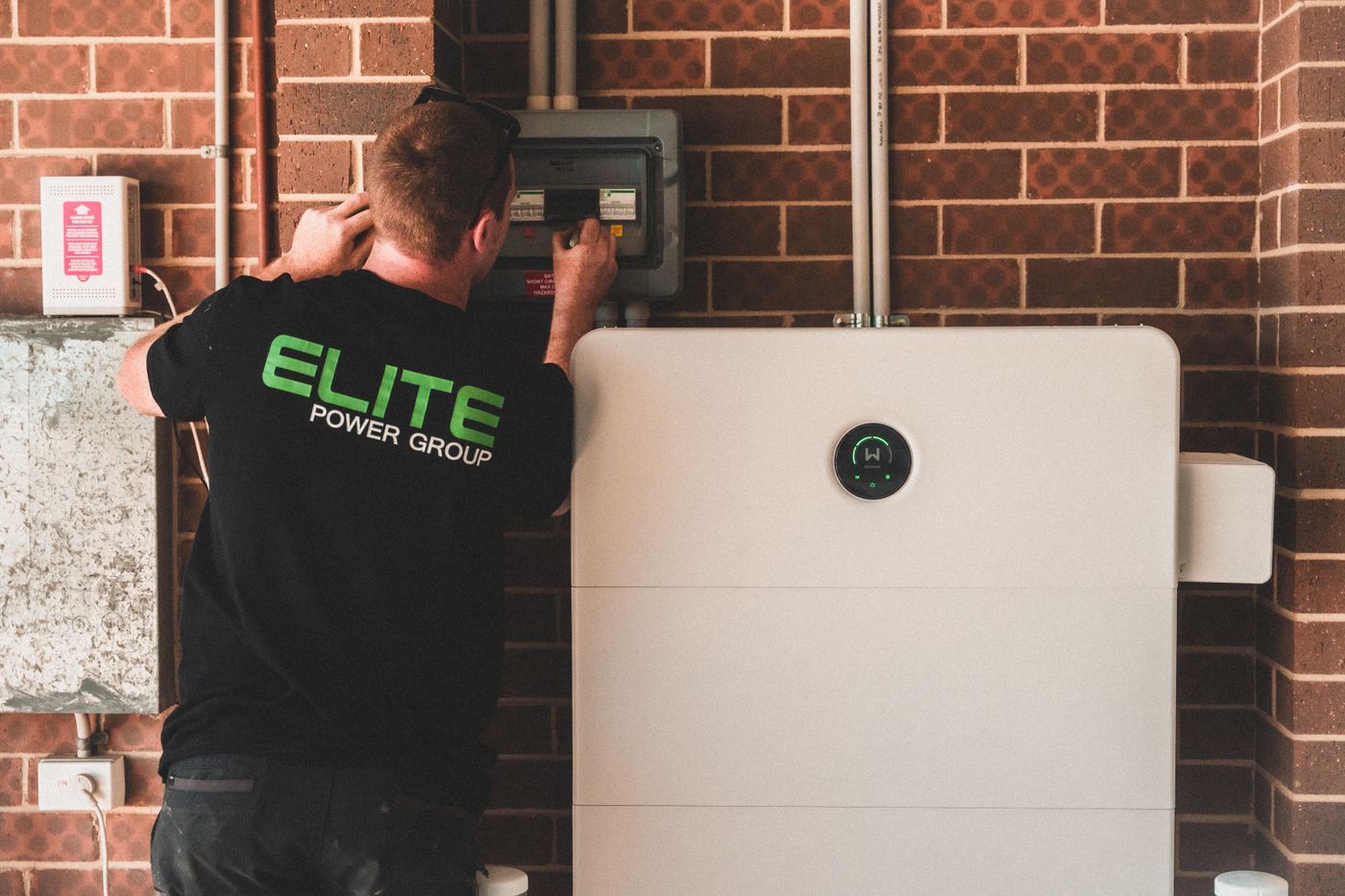
At midday your solar panels often supply more power than your home needs. Without a battery, that surplus goes to the grid. This is called injection. With a battery, you charge the battery first.
In the evening, when the sun is gone and you cook, the battery gives that power back to the house. You then draw less power from the grid.
On a grey November day the battery stays mostly empty. That is not a fault. There is little surplus to store.
A battery has two numbers:
- kWh (capacity): how much power fits in, like the volume of the bathtub.
- kW (power): how fast it can charge and discharge, like the width of the tap.
A wider tap fills the bathtub faster, but does not make it bigger.
Kilowatts and kilowatt-hours: think of a bathtub
The tap is the power in kW, the bathtub is the capacity in kWh and the water level is how full the battery is.
- Tap: kilowatt (kW)
- The charging power. How much energy flows in per hour.
- Bathtub: kilowatt-hour (kWh)
- The capacity. How much energy fits in the battery.
- Water level
- How full the battery is right now.
Charging time in hours = kWh ÷ kW
Worked example (illustration)
An empty battery of 74 kWh, charged at a constant power.
- 7.4 kW wallbox74 kWh ÷ 7.4 kW = 10 hours
- 3.7 kW wallbox74 kWh ÷ 3.7 kW = 20 hours
Our own diagram, drawn to explain, without measured data.
Show the figures as a table
| Power (kW) | Battery (kWh) | Charging time (h) |
|---|---|---|
| 7.4 | 74 | 10 |
| 3.7 | 74 | 20 |
Put both on the quote. Also look at the usable capacity. That is the part you may really use. It is often smaller than the total capacity.
Charging and discharging costs energy. Some is lost as heat. So you never get back all the kWh you put in. Ask the installer for the efficiency and allow for it.
The grant is gone
Flanders used to pay a grant for a home battery. It has stopped:
- The application desk has been closed since 1 December 2024.
- A battery with an AREI inspection certificate dated after 31 March 2023 no longer qualified. AREI is the Belgian set of rules for electrical installations.
- Since 1 July 2026, Flanders also no longer processes pending files.
So do not wait for a new grant. Ask your municipality, or check Premiezoeker (the grant search tool on vlaanderen.be), whether local support exists, but do not count on it.
Where a battery can save money
A battery can pay back in two ways. They are two separate things. Do not mix them up.
1. Using more of your own solar power
You use the power from your roof yourself in the evening, instead of selling it cheaply to the grid. You gain the difference between what you pay for power drawn and what you get for power injected.
Worked example: shifting power
These prices are examples. Use the prices from your own bill. You pay €0.30 per kWh drawn and get €0.08 per kWh injected. Every kWh you shift earns €0.22. You shift 1,500 kWh a year. That is just over 4 kWh a day. You then gain 1,500 × €0.22 = €330 a year, before the losses in the battery. If the installation costs €6,000, it takes over 18 years to earn that back.
With these example prices, a payback of a few years is not possible without a grant. With other prices the sum looks different. So work it out yourself.
2. Lower grid costs by cutting peaks
Part of your grid costs depends on your peak use. This is called the capaciteitstarief (capacity tariff). This is how it works:
- With a digital meter, Fluvius measures what you draw every quarter hour.
- The highest quarter hour of the month is your monthly peak, in kW.
- Your grid costs follow the average of the monthly peaks of the last 12 months.
- Everyone pays for a peak of at least 2.5 kW.
- Only power drawn counts. The power you inject does not count.
In 2026 Fluvius Limburg charges about €49.05 per kW per year, excluding VAT. This is in the Fluvius Limburg tariff list. The Flemish average is about €53.39. It differs per grid operator.
Worked example: cutting peaks
Peak of 6 kW: 6 × €49.05 = about €294 a year, excluding VAT. Peak of 4 kW: 4 × €49.05 = about €196 a year. Difference: about €98 a year.
That amount is small next to the price of a battery. So saving on peaks is at most an extra benefit on top of self-consumption. It also only works if the battery really steps in at the moment of the peak. Ask in the quote how the control system does that.
You can also lower peaks without a battery. Do not switch on the washing machine, the oven and the heat pump at the same time. A charging point with load balancing (control that limits the total load) also helps.
Who does it pay off for, and who not?
It pays off more often if you:
- have enough solar panels and inject a lot of power in the daytime,
- use a lot in the evening (family, cooking, working from home),
- have a heat pump and a charging point that together give high peaks.
It is doubtful if you have few solar panels and so little surplus, or if you are often at home in the daytime. Then you already use your solar power yourself.
Usually it does not pay off if you have no solar panels. The battery then has little to store. It can still store cheap night-time power or work with a dynamic contract (the price changes by the hour). That needs smart control, and you carry price risk. It is not a first step for someone who is just leaving gas or oil.
Do you heat with gas or oil now? Then a better order is usually this: insulate and replace the heating first, then solar panels, and only after that the question of a battery. A heat pump mainly needs power in winter. The sun gives little then, so a battery does not help much there.
What you need to arrange
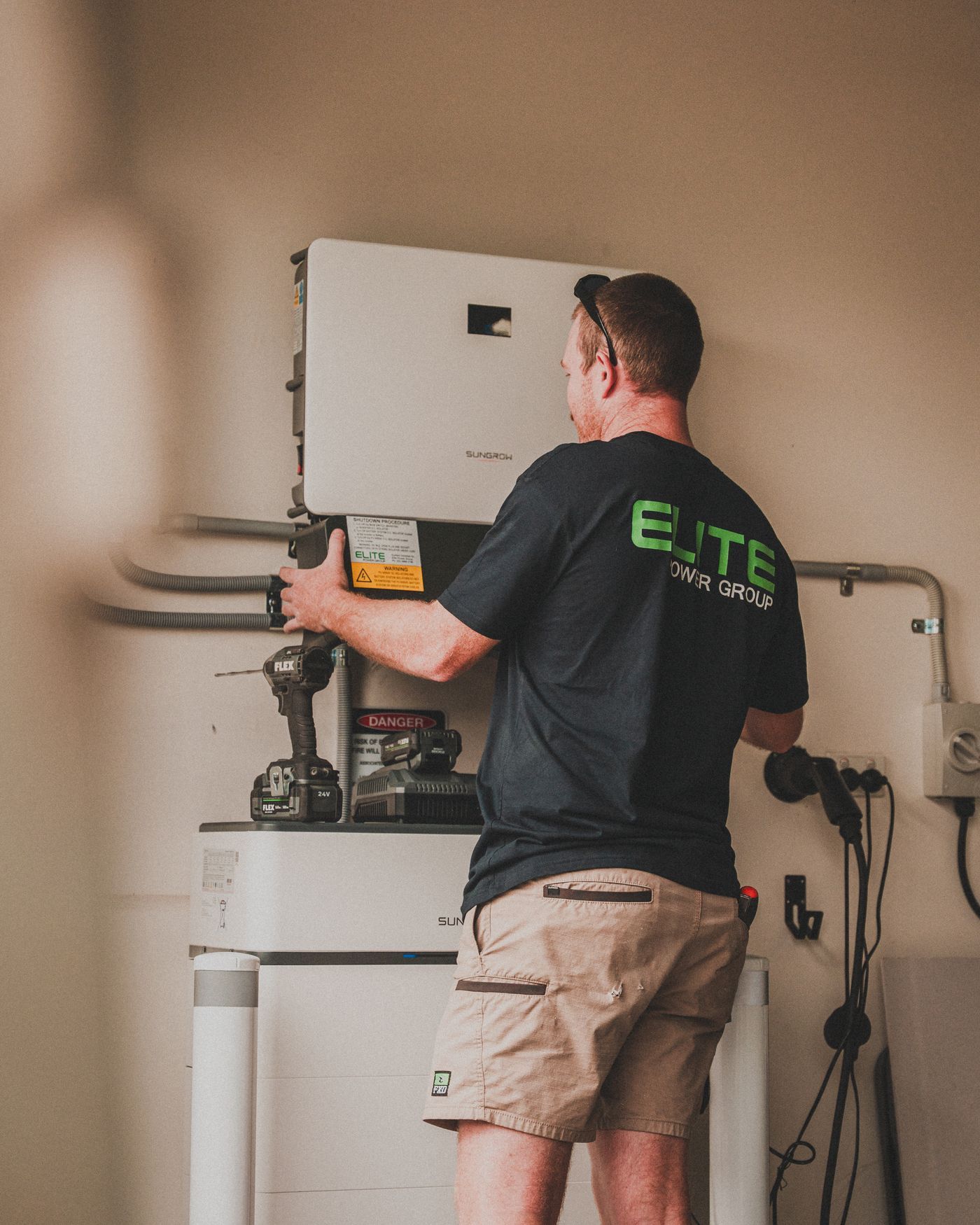
Inspection and registration. A qualified installer fits the battery. You must register a home battery with Fluvius, through Mijn Fluvius. Your installer can do this too. You send a valid AREI inspection and a single-line diagram. That is a drawing of the electrical connection. If your battery has a hybrid inverter and you receive green electricity certificates (an old form of support for solar power), you need a meter that measures in both directions.
Location. Follow the manufacturer's rules for ventilation and clear space. Do not put the battery in a damp cellar, next to the oil boiler or in an escape route. Also tell your fire insurer about the battery.
Inverter. The inverter turns the direct current from the panels into power for the house. Some batteries connect to a hybrid inverter that controls panels and battery together. Others stand as a separate unit next to your existing inverter. With existing panels this is often simpler. Ask whether your inverter is suitable and who sets up the control.
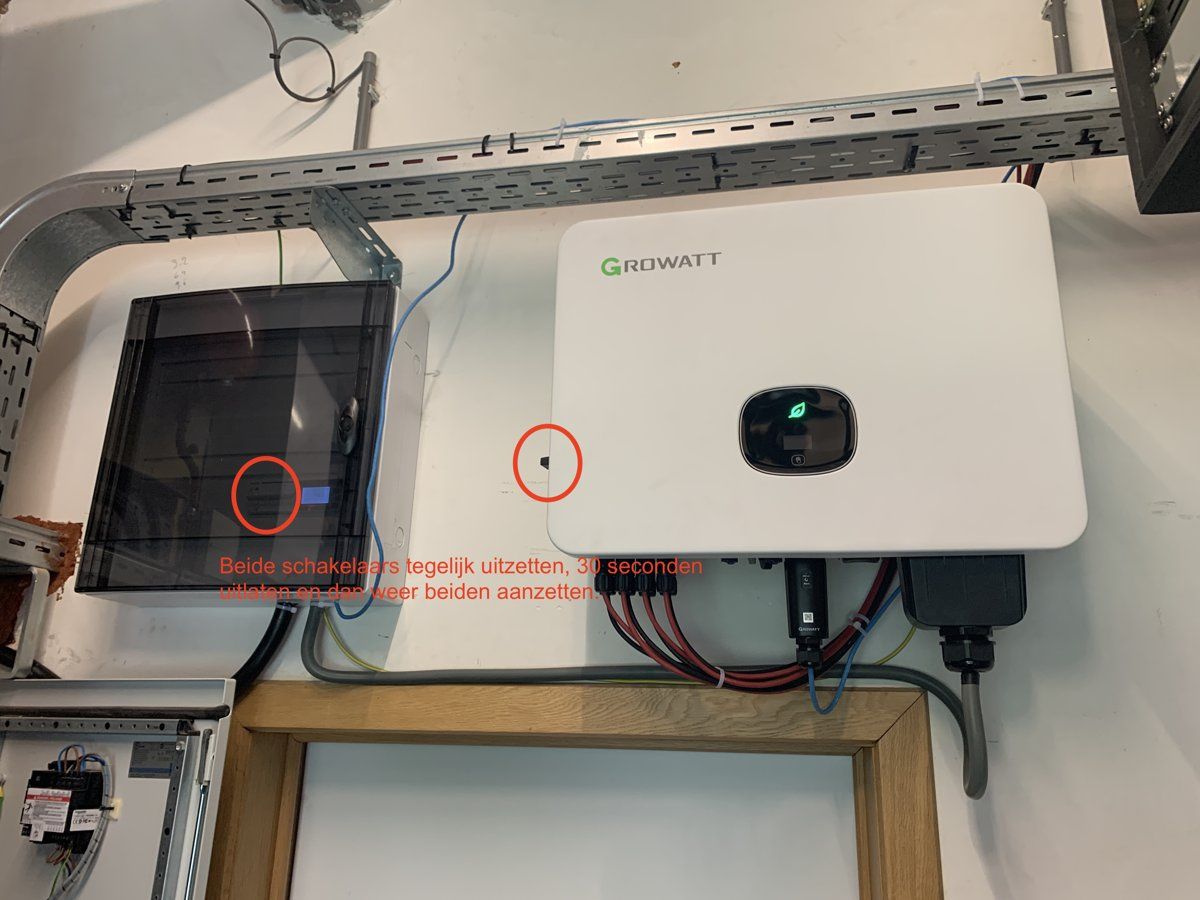
Power cut. Many installations also go down in a power cut. Only a separate emergency power function (backup) keeps part of the house powered. That function costs extra. Ask for it explicitly.
What to ask in the quote
Ask for at least two quotes with the same usable kWh and the same power. Check this:
- the usable capacity (kWh) and the maximum charge and discharge power (kW),
- the efficiency,
- the warranty: how much capacity is left after ten years, and does the warranty end after a number of years or a number of full charge cycles, whichever comes first,
- what happens in case of a fault: replacement of one module, of the whole battery or only of the electronics,
- whether inspection, registration with Fluvius and connection to the inverter are in the price,
- how the control system stops peaks when the charging point, heat pump and hob run together, and which device gets priority,
- who you call about a fault after two years.
A battery that is too big and that you rarely fill costs more and adds little. Choose by the kWh you can really shift each day.
What now?
- Open Mijn Fluvius and look at your injection, consumption and monthly peaks for the past year.
- Estimate how many kWh you inject in the daytime and draw again in the evening.
- Work out the sum with your own prices, as in the example above.
- If the result is doubtful, first try changing habits: wash in the daytime, spread out peaks.
For independent advice on your home and renovation you can go to Energiehuis Limburg. It has, among other things, a home energy desk (woonenergieloket) and free guidance on renovations.
Sources and disclaimer
This text is based on:
- Vlaanderen.be: home battery grant stopped
- Vlaamse Nutsregulator: capaciteitstarief
- Vlaamse Nutsregulator: distribution grid tariffs 2026 (Fluvius Limburg tariff list)
- Fluvius: home battery
- Energiehuis Limburg
This is general information, not personal advice or a quote. Tariffs and rules can change. As of 30 October 2026.
Author: Wouter Hermans
Stay up to date with Bronsgroen
Once a month, news about our projects in Limburg, our activities and how you can take part. You can unsubscribe at any time.