In short
- Warm air rises. With little insulation in the loft or roof, the heat from your boiler escapes outside. That is why you usually start with the roof.
- The new insulation layer needs an Rd value of at least 4.5. Mijn VerbouwPremie (the Flemish renovation grant) asks for the same.
- Since 1 March 2026, owner-occupiers in income categories 1 and 2 no longer get a grant for insulation. Categories 3 and 4 still get 35% or 50% of the invoice, up to a maximum.
- A contractor must do the work. If you insulate yourself, you get no grant.
- Plan the ventilation too. Without fresh air you get damp and mould.
Why the roof first
Warm air rises. If your loft or roof has little insulation, the heat from your radiators drifts up and out. Your boiler has to make up that loss. You pay for it in cubic metres of gas or litres of heating oil.
Insulation does not make heat. It keeps in the heat you have already paid for.
Are you thinking about a heat pump later? Then insulate first. A heat pump works best in a home that loses little heat. In a leaky home the unit is too big and too expensive. The article "Heat pump: is your home ready?" in this knowledge base explains this.
If you keep burning gas or heating oil, insulating still pays. You use less for the same comfort and feel fewer draughts.
After the roof, the usual order is external walls, then windows and the floor. The right order depends on your EPC (the energy performance certificate, with the energy score of your home), your budget and any damp problems.
How to spot a poor roof or a cold loft
A poorly insulated roof usually gives signs:
- The loft is ice cold in winter, while the radiators downstairs work hard.
- Snow melts fast on one roof slope, or icicles hang from the eaves.
- There is condensation or mould on the top ceilings.
- Your energy use is clearly higher than that of neighbours with a similar home.
Take photos of the loft, the rafters (the wooden beams of the roof) and any existing insulation. Note the thickness and material if you recognise them. With these photos, an adviser and a contractor can tell sooner what is needed.
Insulating the roof or the loft floor
It depends on your loft.
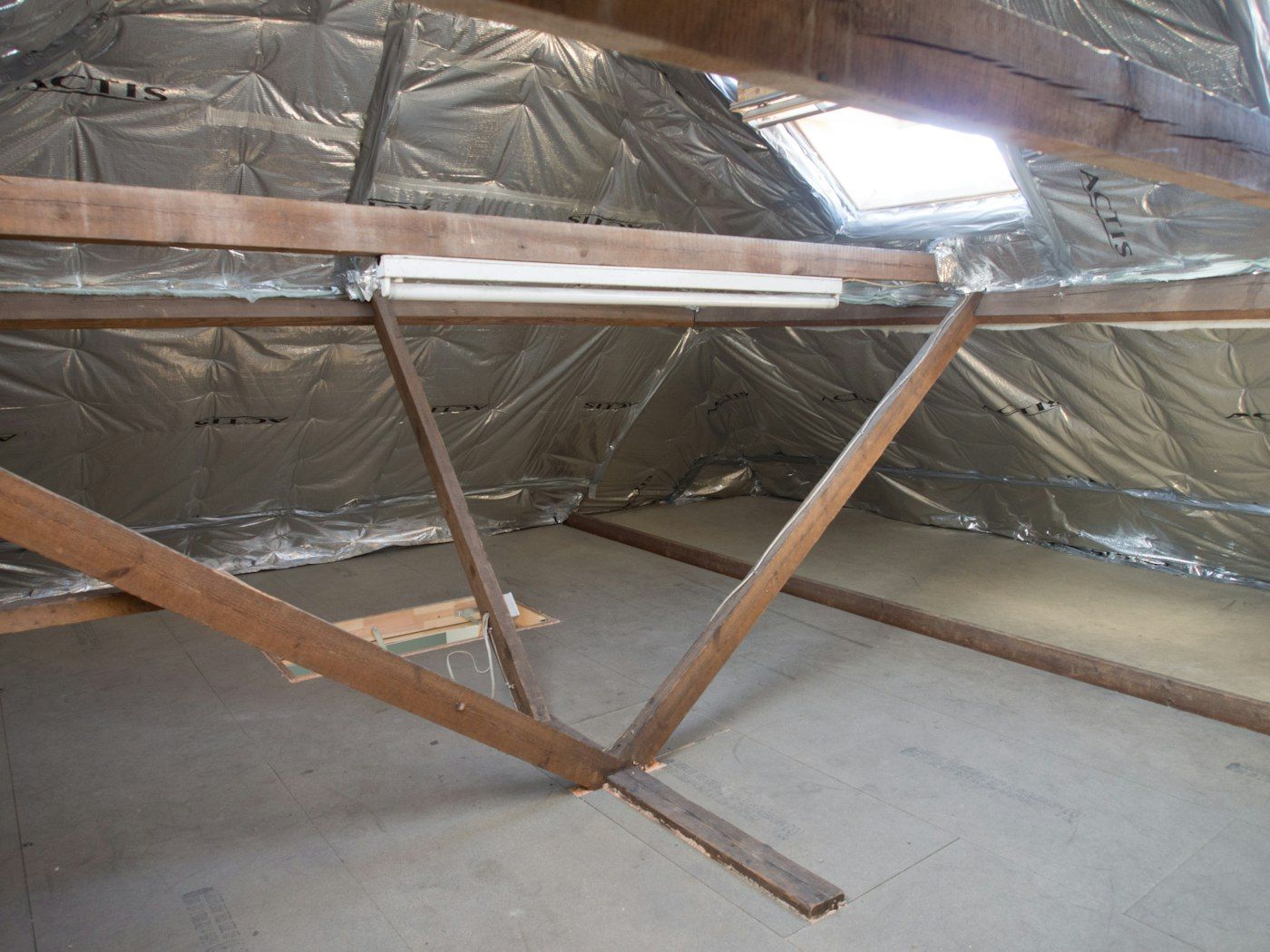
Unheated loft. Insulate the loft floor. The heat then stays in the rooms below. This is often the simplest job. The loft itself stays cold.
Heated or lived-in loft. Insulate the sloping roof, so the loft sits inside the warm part of the house.
For the grant this difference matters. A loft floor only qualifies if the loft is not heated. A roof only qualifies if it closes off a heated space. A conservatory, a garage or an unheated outbuilding gets no grant.
Rd value: how well the layer insulates
A quote shows an Rd value, for example "Rd 4.5". This is the thermal resistance of the new layer, in m²K/W. The higher the Rd, the better the layer insulates.
For the roof, Mijn VerbouwPremie asks for an Rd of at least 4.5. Existing insulation does not count. Only the new layer has to reach this value.
The Rd depends on the thickness and the material. Ask the contractor what thickness they need to reach Rd 4.5, and have the Rd written on the quote.
Thick insulation only helps if it is fitted well. Gaps and a broken layer let heat through.
Airtightness and ventilation
Warm air also escapes through small holes: around pipes, at the loft hatch and where the roof meets the wall. Ask on the quote how the contractor finishes these details.
If you insulate a sloping roof from the inside, the grant requires a vapour barrier. This is a film that stops moist indoor air, so no moisture gets into the insulation.
Your home also needs fresh air. This can be done with vents in the windows or with a mechanical ventilation system. If you make a home more airtight without ventilation, condensation forms on the cold spots that remain. Ask your contractor how you will ventilate after the work.
Do you have damp walls, for example from rising damp or a leak? Find the cause first. Insulation does not fix a wet wall.
Asbestos in the roof
Corrugated sheets, slates and underlays of older roofs can contain asbestos. Never work on them yourself. Have a contractor with the right accreditation identify and remove the material.
Mijn VerbouwPremie pays an extra 8 euros per m² for asbestos in the roof covering or the underlay. This only applies together with roof insulation, and a contractor must do both jobs. The grant for insulation and asbestos together is capped at 50% of the invoice.
Grants and loan in 2026
Who still gets a grant
Since 1 March 2026, owner-occupiers in income categories 1 and 2 no longer get Mijn VerbouwPremie for insulation. The same applies to owners who also own a second home or building land (they fall into category 1 automatically) and to other investors. They can still get a grant for a heat pump or a heat pump boiler, for applications up to and including 31 December 2027.
Owner-occupiers in categories 3 and 4, and landlords who let to a social housing company, keep their insulation grant. Their income category sets the percentage:
| Work | Category 4 | Category 3 |
|---|---|---|
| Roof or loft floor | 50% of the invoice, max. 5,750 euros | 35% of the invoice, max. 4,025 euros |
| External wall | 50% of the invoice, max. 5,000 euros | 35% of the invoice, max. 3,500 euros |
The amounts apply to applications from 1 July 2025, on the invoice excluding VAT. For the roof, the invoice counts up to 11,500 euros. For the external wall, the invoice counts up to 10,000 euros. If the invoice is below 1,000 euros, you get no grant.
An example: your roof insulation costs 10,000 euros excluding VAT. In category 4 you get a grant of 5,000 euros. In category 3 you get 3,500 euros. In categories 1 and 2 you get nothing. If the invoice is 14,000 euros, only 11,500 euros counts. You then get the maximum of 5,750 euros (category 4) or 4,025 euros (category 3).
Conditions
- A contractor does the work. You may buy the materials yourself, if the contractor fits them.
- You apply with the final invoice. At the time of application it may not be older than two years.
- For the same home and the same owner, a roof gets a grant only once in five years.
- The simulator for Mijn VerbouwPremie on Vlaanderen.be (the website of the Flemish government) shows which income category applies to you. Do this before you ask for quotes. Then you know whether you can count on a grant.
Mijn VerbouwLening
A Mijn VerbouwLening (the Flemish renovation loan) can finance the work. You borrow between 4,000 and 60,000 euros, for up to 25 years. For applications in 2026 the interest rate is 0% in category 4, 0.5% in category 3 and 1.5% in category 2.
VAT
For work on a home that is at least ten years old, VAT is often 6% instead of 21%. You can find the conditions at FPS Finance (FOD Financiën). Ask the contractor to put the rate on the quote.
The quote
Ask for at least two quotes with the same description of the work. A low price is no bargain if scaffolding, removal of old material or asbestos is missing.
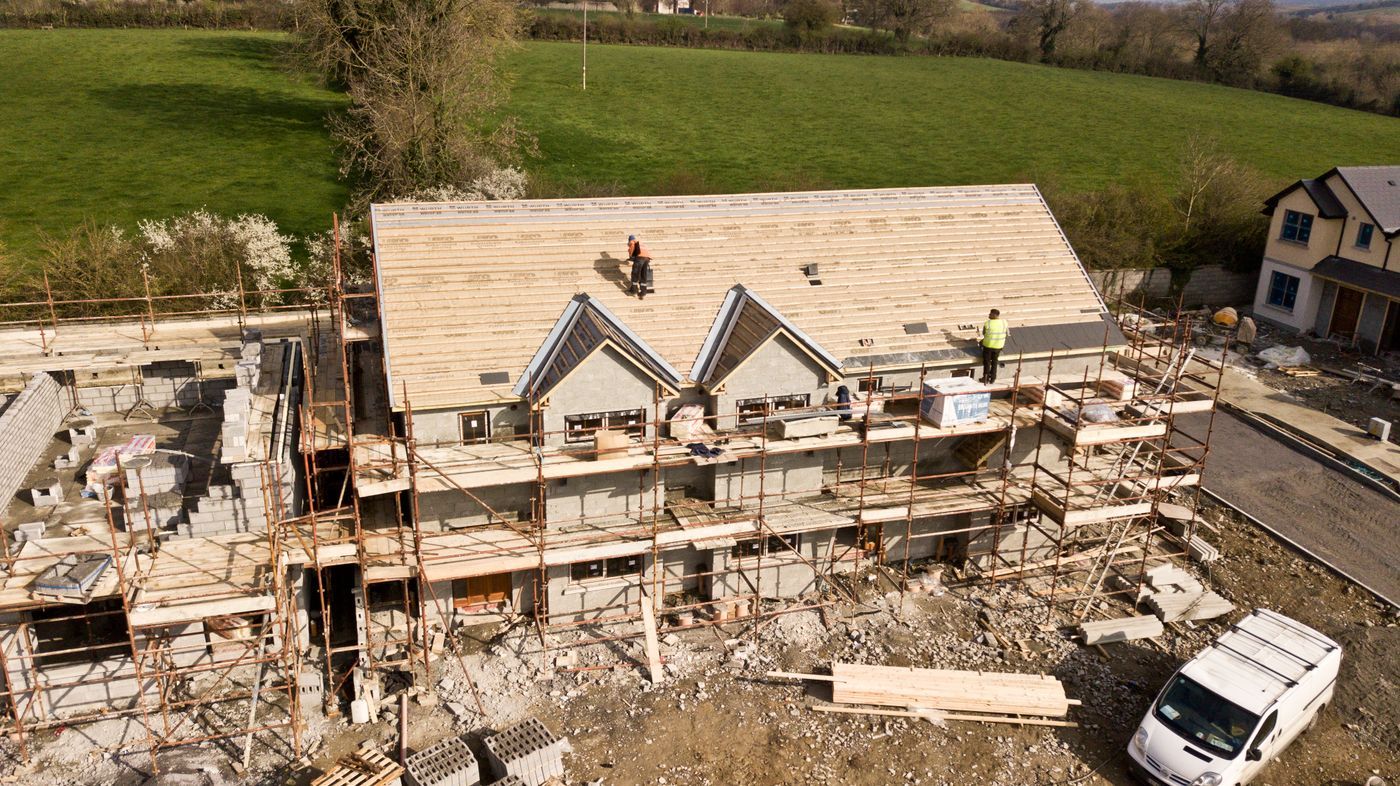
Check that the quote states:
- The material, the thickness and the Rd value.
- Whether the quote covers the whole roof slope or the whole loft floor, including the awkward corners.
- Whether old material is removed or left in place. This sets the total build-up height and the Rd.
- How pipe penetrations, the loft hatch and the joints with the walls are sealed.
- Whether a vapour barrier or an underlay is needed.
- How you ventilate after the work.
- The VAT rate, scaffolding and waste removal.
- Who your contact is in bad weather or if asbestos turns up unexpectedly.
Agree nothing verbally. What is not on paper is hard to enforce afterwards.
Combining with solar panels or new roof tiles
Do you plan solar panels or new roof tiles in the next few years? Then do the work together. Opening the roof to insulate and again five years later for panels means doing the work twice. If you fit panels first and insulate later, the panels have to come off and go back on. That costs extra.
What now?
- Find your EPC and take photos of the loft and roof.
- Check your income category in the simulator on Vlaanderen.be.
- Ask Energiehuis Limburg for advice (the Flemish energy advice centre for Limburg). It gives free, independent advice and helps with the grant and the loan. Call 089 77 81 29, or make an appointment at the home energy desk (woonenergieloket) in your municipality.
- Then ask for at least two quotes with the same description.
Sources and disclaimer
This article uses the Vlaanderen.be pages on Mijn VerbouwPremie for roofs, Mijn VerbouwPremie for external walls, the changes from 2026 and the Mijn VerbouwLening, and the website of Energiehuis Limburg.
This is general information, not personal advice. Grants and conditions can change: check them before you decide. As of 30 October 2026.
Author: Wouter Hermans
Stay up to date with Bronsgroen
Once a month, news about our projects in Limburg, our activities and how you can take part. You can unsubscribe at any time.