In short
A wind turbine or a large solar roof in your municipality does not make your heating bill smaller. If you heat with gas or heating oil, you gain most at home from insulation and a heat pump. You can still take part locally. Citizens, schools, businesses and local authorities can generate electricity together and share it among themselves, in an energy community. That electricity reaches you through the normal grid, and you need a digital meter for it. If you buy shares in a project, that is an investment with risk.
At home and together are two separate topics
At home is about your own house: roof, walls, boiler, meter. Grants such as Mijn VerbouwPremie belong here. That is the Flemish grant for renovation work. Taking part in a wind project does not fall under it.
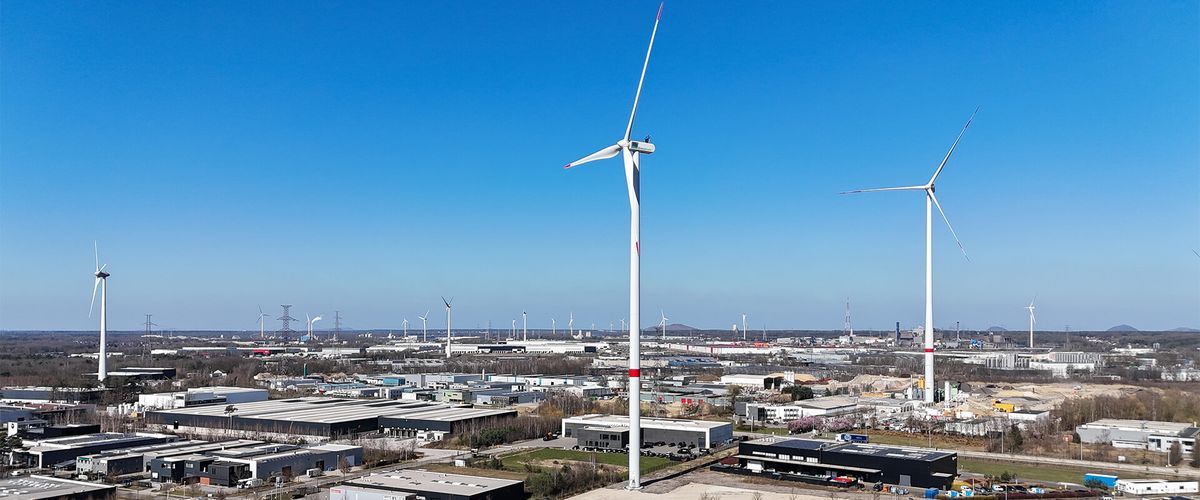
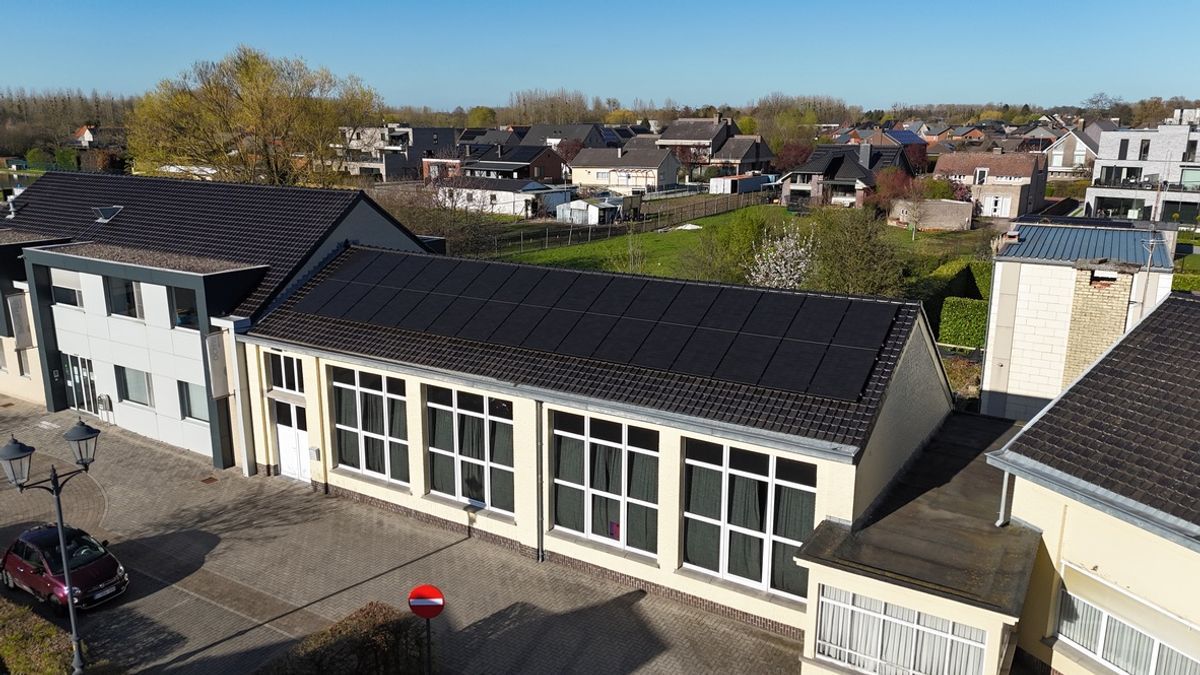
Together is about installations bigger than one family roof: a school roof covered in solar panels, a company roof, a wind turbine on an industrial estate. In Genk-Zuid, for example, there are 20 turbines, according to VRT NWS in June 2026.
The two topics run side by side. A turbine in the municipality does not warm a draughty roof. So insulate first if you have not yet, and only then look at what you want to do locally.
What an energy community is
An energy community is a group of citizens, schools, businesses and local authorities who invest in energy together. That can be solar panels, a neighbourhood battery or charging points. According to Flanders, there are about 80.
The group must be a legal entity, for example a co-operative company or a non-profit association (vzw). An informal association is not enough. Anyone may take part. Only natural persons, local authorities and small businesses have a say in decisions. Large companies can join, but cannot decide.
There are two kinds: the citizens' energy community and the renewable energy community. The differences are legal and are set out on the Flanders page. For you as a participant, the following matters most.
How energy sharing works
Energy sharing (energiedelen) is one of the things an energy community can do. It works like this:
- An installation, for example a solar roof, feeds electricity into the grid.
- A participant uses electricity at the same moment.
- Fluvius, the Flemish grid operator, works out afterwards how much of that electricity is allocated to which participant.
No cable runs from the roof to your socket. You stay connected to Fluvius, and your supplier stays your supplier. The sharing happens on paper, based on meter data.
Fluvius calculates per quarter of an hour. Electricity that is not generated and used in the same quarter of an hour cannot be saved for later. The results usually appear around the 25th of the following month in Mijn Fluvius, the Fluvius online customer area.
What you need:
- your own connection and your own digital meter (installation is free, you request it through Mijn Fluvius);
- measurement regime 3 (meetregime 3): this is the permission for your meter to pass on consumption and injection every quarter of an hour. You request it from your own supplier, and report it again if you change supplier;
- a supply contract, because when there is too little shared electricity, you simply take electricity from your supplier;
- participation in the Flemish Region. Sharing may not be your main commercial or professional activity.
Check in your contract whether your supplier sets extra conditions or charges an administrative fee. According to the Flemish regulator (Vlaamse Nutsregulator), most suppliers do.
What it gives you, and what it does not
Shared electricity lowers only the energy part of your bill. You still pay network tariffs, levies and taxes. The sharing itself earns you no income. You use shared electricity, and that lowers the energy part of your bill.
So your bill does not drop to zero. Your boiler does not change either: heat stays a matter of insulation, a heat pump or a hybrid system.
A citizen who wants to join a wind project or solar roof often buys shares in a co-operative. That is an investment, not an energy contract. The return is not guaranteed. A poor wind year or a delayed permit can reduce the result. A label such as "green" or "local" is not a guarantee either. Do not decide on a marketing line.
Do you rent? Then you can take part if you have your own connection and a digital meter, as Fluvius requires. Whether you may join also depends on the group.
Wind in Limburg
A wind turbine produces far more electricity than a family roof. That is why it usually stands on an industrial estate, as in Genk-Zuid.
Before it stands, there is a permit procedure with studies on noise, shadow flicker and nature. That usually takes years. Keep facts (distance, noise limits, procedure) and taste (what does the landscape look like?) apart. Both are allowed, but anyone who mixes them ends up in a discussion without end.
Questions for every project
Take a list to an information evening and read the documents afterwards at home, at your own pace.
- Who is legally responsible for the installation, and who owns it?
- How long does the contract for the roof or the land run? What happens on bankruptcy or if the building is sold?
- Which costs do you pay, one-off and every year? Which returns are estimates and which are fixed?
- How are production and allocation measured?
- How can you leave, and what does it cost?
- Who hears your complaint about nuisance?
A well-prepared project gives you all this in writing. Be wary of promises such as "no risk", "everyone wins" or "sign tonight". Also ask for Fluvius documentation if someone says that "the meter simply runs backwards for the whole street".
What now?
- Have your home assessed if that has not happened yet. Energiehuis Limburg (the Limburg energy advice office) gives free, independent advice on renovation and grants (089 77 81 29, or through your municipality).
- Look at the Flanders page on energy communities and note which projects are running in your municipality.
- Take your list of questions to an information evening, and sign nothing on the day itself.
Sources and disclaimer
This article is based on:
- Energy communities (Flanders)
- Energy sharing (Fluvius)
- Energy sharing and selling energy (Vlaamse Nutsregulator)
- Energiehuis Limburg
- Two new wind turbines in Genk (VRT NWS, 11 June 2026)
Disclaimer: This is general information, not personal advice. Rules and project statuses change. As of 30 October 2026.
Author: Wouter Hermans
Stay up to date with Bronsgroen
Once a month, news about our projects in Limburg, our activities and how you can take part. You can unsubscribe at any time.