In short
Every day a European auction sets the wholesale price for each quarter-hour of the next day. The most expensive power plant needed to meet demand sets the price for all suppliers. That is often a gas plant, even when most of the power comes from cheaper sources. With plenty of sun and wind, the price falls to zero and sometimes below. The energy price is roughly 35 to 45 per cent of your bill. What you pay depends mostly on your contract.
Often heard: what is true?
| What you hear | Is it true? | Why |
|---|---|---|
| "Electricity is expensive because of gas, even when it comes from wind and solar." | Partly true | Gas sets the price in many hours, but not in all: with plenty of sun and wind, the price falls to zero or lower. |
| "The most expensive plant sets the price, so all power costs the same to make." | False | Only the price is the same for everyone. Production costs differ widely, and cheap plants keep the difference. |
| "Green power makes electricity more expensive." | Partly true | Wind and solar push down the wholesale price, but part of the cost of subsidies and of the grid is also on your bill. |
| "The market is systematically manipulated by producers." | False | The pricing rule is public and applies to everyone. Isolated cases of abuse exist and are punished, but the sources show no systematic steering. The profit of cheap producers remains a fair debate. |
| "With negative prices, I get paid to use power." | It depends | That applies only with a dynamic contract. With solar panels, you may pay yourself to put power on the grid (injection). |
| "When the wholesale price falls, my bill falls straight away." | It depends | A variable contract follows quickly. A fixed contract does not follow during its term. |
One auction a day, one price per quarter-hour
You cannot store electricity in large amounts. Supply and demand must match at every moment. That is why there are markets from years ahead to a few minutes before delivery.
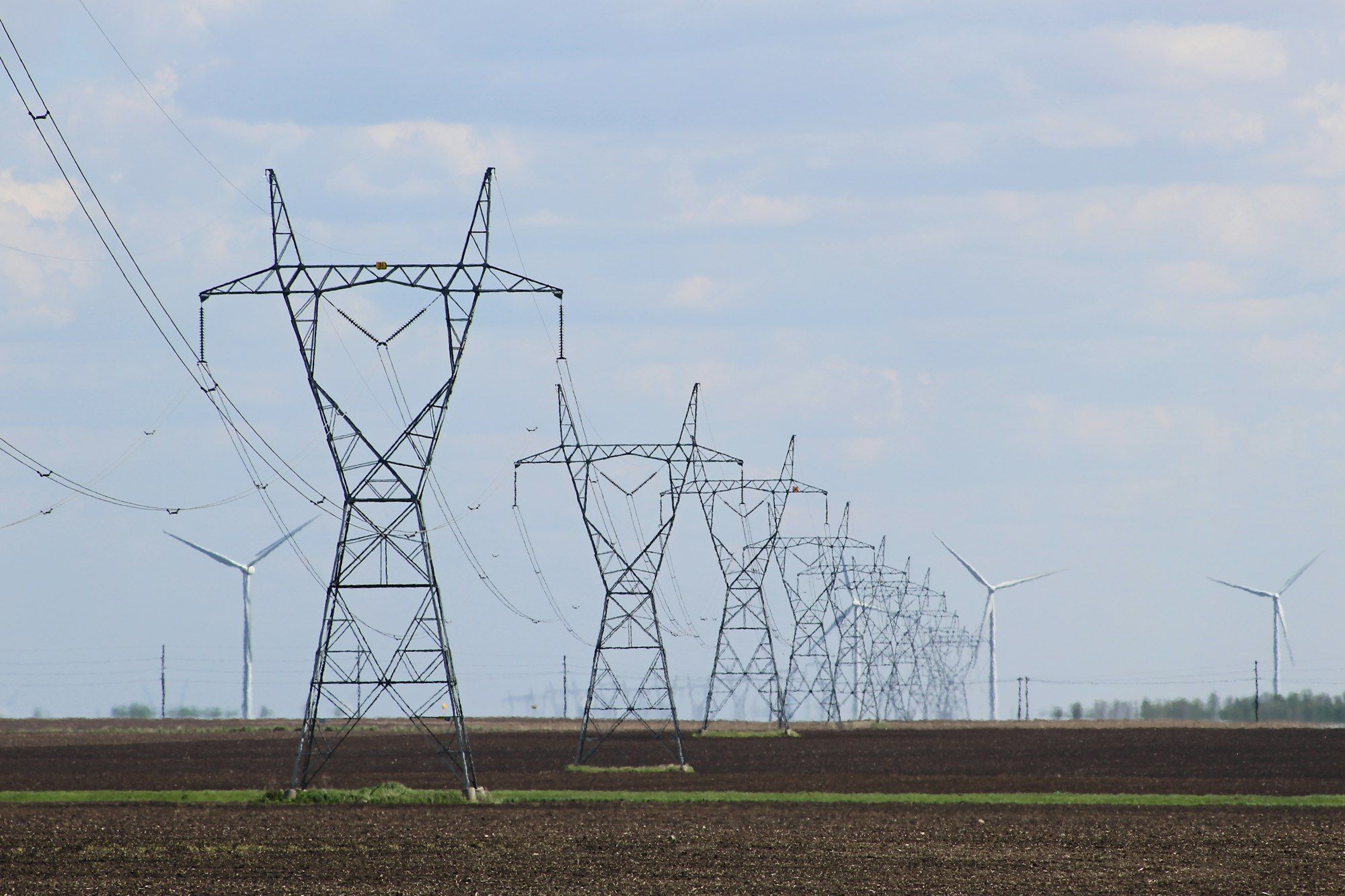
The day-ahead market (the market on the day before for the next day) is the reference. Exchanges such as EPEX SPOT collect the bids of producers and suppliers the day before. Orders close at 12:00 (Central European Time). The prices are known around 13:00. According to the exchanges' procedure manual, that is not earlier than 12:55.
A calculation program, EUPHEMIA, processes all bids from across Europe at the same time. It looks for the result with the greatest total benefit for buyers and sellers. It also takes into account the capacity of the links between countries. This coupled system is called SDAC. It gives one price per zone and per period.
Since delivery on 1 October 2025, that period is 15 minutes instead of an hour. A day therefore has 96 prices. One MWh (megawatt hour) is 1,000 kWh. The price lies between a floor of minus €600 per MWh (since 28 May 2026, before that minus €500) and a ceiling of €4,000 per MWh.
The merit order: the last plant sets the price
As a rule, each producer bids at its marginal cost. That is what one extra MWh costs it: fuel, CO₂ and small running costs. The program puts all bids in a row from cheap to expensive. That order is called the merit order. The program accepts bids until demand is met.
The last bid needed sets the wholesale price. All accepted producers get that price. This is called pay-as-clear. A cheap plant therefore gets the same price as the most expensive one that was still needed.
How often is that a gas plant? In a simulation for 2022 by the European Commission's Joint Research Centre (JRC), gas set the price 55 per cent of the time, while gas then supplied 19 per cent of European electricity. Fossil plants together set the price about 86 per cent of the time. That is a model for the whole of Europe, not a measurement for Belgium.
Why does this rule exist? The European agency ACER, in which the energy regulators work together, judged in 2022 that letting the marginal bid set the price remains the most effective way to secure competition and efficient use of plants. This is in the JRC study.
The rule also draws criticism. Low-cost plants keep the difference between their costs and the wholesale price. That difference covers their construction costs, but in 2022 it could produce unexpectedly high profits. That is why the EU temporarily capped revenues above €180 per MWh at the end of 2022.
Manipulation is a different question from the pricing rule. Market manipulation is forbidden. ACER monitors trading and national regulators impose fines. In 2025, ACER received 204 reports of suspicious transactions and orders, twice as many as a year earlier. A recent example is a fine of €16,000 in Estonia (October 2026) for manipulating the balancing market. The sources consulted contain no evidence that producers systematically steer the price on the day-ahead market.
What a gas plant costs: gas and CO₂
The bid of a gas plant follows from the gas price and the CO₂ price. Plants in the European emissions trading system (ETS) must hand in an emission allowance for each tonne of CO₂. The total number of allowances falls every year. The price of an allowance fluctuates on the market. According to the European Commission, the average auction price was €75.36 per tonne in the first quarter of 2026, €75.28 in the second and €82.32 in the third.
Illustration, not market data. Take a modern gas plant with 55 per cent efficiency. Per MWh of electricity it emits about 0.37 tonnes of CO₂ (the IPCC gives 0.404 tonnes at 50 per cent efficiency). Use €80 per tonne of CO₂ (rounded). The CO₂ then costs 0.37 × 80 = €29.6.
- Gas at €30 per MWh: 30 ÷ 0.55 = €54.5 of fuel. With the CO₂, about €84 per MWh, or 8.4 cents per kWh.
- Gas at €100 per MWh: 100 ÷ 0.55 = €181.8 of fuel. With the CO₂, about €211 per MWh, or 21.1 cents per kWh.
If the gas price rises, the whole price rises in every quarter-hour in which gas is the marginal plant. On 28 October 2026, the European gas price (TTF) rose above €100 per MWh, for the first time since December 2022, Montel reports. Such shocks feed through to the wholesale price of electricity.
Why wind and solar push the price down
Wind and solar cost almost nothing per extra MWh. They bid around zero and stand at the front of the line. If together they cover a large part of demand, the expensive gas plant drops out of the line. The last plant needed is then cheap. The JRC calls this displacing more expensive fossil production.
The flip side is in the 2026 ACER report. When the sun goes down in the evening, gas plants step in more often. Price swings within a day are about five times larger than in 2020.
In 2025, solar panels in Belgium produced a record 10.1 TWh (1 TWh is 1 billion kWh). On 4 October 2025, wind and solar together covered 90 per cent of consumption in one quarter-hour, grid operator Elia reports (provisional figures).
Try it yourself
Move the sliders "Gas price", "CO₂ price", "Wind and solar" and "Demand". Watch how the price changes. Also try the scenarios "Sunny midday", "Windless winter evening" and "Gas price shock".
Schematic example, not real market data
How the electricity price forms: the merit order
Power sources line up from cheapest to most expensive. The most expensive source needed to meet demand sets the price for everyone.
Modern gas plant is the most expensive source needed to meet demand. Its cost sets the price for every source in use.
Faded areas are not used.
Move the sliders and see what happens to the price.
Settings: gas 35 €/MWh, CO₂ 70 €/t, wind and solar 3 GW, demand 9 GW.
| Source | Capacity (GW) | Cost (€/MWh) | Status |
|---|---|---|---|
| Wind and solar | 3 | 0 | Fully used |
| Nuclear | 2 | 10 | Fully used |
| Biomass and waste | 1 | 45 | Fully used |
| Modern gas plant | 5 | 89.5 | Sets the price |
| Imports | 4 | 90 | Not needed |
| Older gas plant | 3 | 130.6 | Not needed |
| Emergency reserve | 3 | 250 | Not needed |
The numbers are made up to show the principle. Real prices depend on much more, such as grid congestion, maintenance, weather and trade with neighbouring countries.
What you see. If wind and solar cover all demand, the price falls to zero. If demand is high and wind and solar are not enough, a gas plant often sets the price. A higher gas price lifts the price as long as gas is the last plant. The chart is a schematic teaching model, not market data.
Negative prices: why, and who pays?
In 2025, the Belgian wholesale price was below zero for more than 520 hours. That is a record, the federal regulator CREG reports (via VRT NWS). It is about 6 per cent of all hours, in line with the 6.1 per cent of the time that Elia gives.
Why do producers keep offering power at a negative price? A 2014 research article from KU Leuven names three causes of negative prices in Belgium. Plants with technical limits, such as nuclear plants, cannot ramp down fast. Some plants must keep running to provide grid services. And subsidy schemes, such as green electricity certificates, reward production even when the wholesale price is low. The article is mainly about the imbalance market. Read it as an explanation of the mechanism, not as a measurement of 2025.
Who pays? On the exchange, the seller pays the buyer. For households, the benefit exists only with a dynamic contract. With solar panels, the flip side also plays a part. The Vlaamse Nutsregulator (VNR, the Flemish utilities regulator) estimates that in 2025 almost 29,000 Flemish prosumers (households with solar panels) received a negative payment for at least one month, so they paid for injection. That happened with variable contracts. It is about 3 per cent of prosumers with a digital meter (own calculation, based on the VNR report as Solarmagazine summarises it). Who in the end funds the subsidies for solar and wind farms is a separate question about subsidy schemes.
Buying ahead: the forward market and PPAs
The day-ahead price is not the price everyone pays. Producers and suppliers buy and sell ahead of time on the forward market. On ICE Endex, parties trade Belgian power contracts for a month, a quarter or a year. Delivery is physical, on the Belgian high-voltage grid.
The CREG described in 2022 how this works. Producers sell their output gradually, so their income is already fixed before they produce. Each supplier has its own strategy to hedge (buy ahead). A supplier generally hedges only part of its fixed-price sales, because households can end their contract with one month's notice. A fixed price therefore follows earlier purchases and reacts to the wholesale market with a delay.
A power purchase agreement (PPA) is a long-term contract between a producer and a buyer (a company, a supplier or a trader) at an agreed price. According to ACER, PPAs protect buyers against price swings. How available PPAs are differs widely between countries. PPAs also differ in delivery profile. With pay-as-produced, the buyer pays for what the solar or wind farm actually delivers. The buyer then carries the volume and profile risk. With baseload or shaped, the delivery profile is fixed. Then the producer or an intermediary carries the profile risk. This distinction is in a European Commission recommendation of April 2026.
What a PPA does not do: it does not change the price on the day-ahead market. That still comes from the auction. A household notices a PPA only indirectly, through its supplier's costs. According to the JRC, more PPAs and contracts with a guaranteed price (contracts for difference) limit how strongly consumers feel high and swinging prices.
A few minutes before delivery: intraday and imbalance
After the day-ahead market, trading continues (intraday, within the delivery day). The intraday auctions close at 15:00 and 22:00 the day before and at 10:00 on the day itself. Trading also runs on until shortly before delivery. This lets parties correct their forecasts of wind, solar and consumption.
Elia is the grid operator that keeps the grid in balance. Every supplier or producer has a balance responsible party. Anyone who, per quarter-hour, draws or injects more or less than announced gets settled by Elia at an imbalance price per quarter-hour. You do not feel this directly. It does force market parties to forecast accurately.
Belgium: Elia, neighbouring countries and nuclear power
Belgium is connected to the European grid. In 2025 our country imported a net of about 14 TWh of electricity, mostly from France and the Netherlands, Elia reports (provisional figures). Imports happen mostly when power is cheaper abroad. That makes the Belgian price move with the neighbouring countries. Nuclear power supplied 34 per cent of Belgian production, gas 19 per cent. Elia notes that cheaper French power pushes Belgian gas production out of the market.
Nuclear power rarely sets the price, because its marginal cost is low. Its influence lies in supply. In 2025 three reactors closed: Doel 1, Tihange 1 and Doel 2. Doel 4 and Tihange 3 remain. In May 2025 the Chamber repealed the 2003 law on the nuclear phase-out. The federal government extended both reactors by ten years, to 2035. It wants to extend that to 2045.
At the end of April 2026 the government and Engie signed a non-binding letter of intent on a state takeover of the nuclear assets. The talks are still going on. On 30 September 2026 the target date for an agreement on the main lines moved to 4 November 2026. What this means for the price depends on the gas price and on prices in neighbouring countries. No clear forecast exists.
From wholesale price to your bill
Your bill has four parts: energy, grid costs, levies and VAT. VAT has been permanently 6 per cent since 1 April 2023. Grid costs in 2026 were about €463 a year for a typical Flemish household with 3,500 kWh, €20 less than in 2025 (Test-Aankoop, the Belgian consumer organisation). The share of the energy price has swung in recent years between about 35 and 45 per cent. In August 2026 it was 43 per cent, according to the CREG reference table as CallMePower shows it. We could not consult an official breakdown from the CREG or the VNR. Read this as a range. Grid costs and levies change only once or twice a year and do not follow the wholesale price.
How fast the wholesale price reaches you depends on your contract. The CREG wrote in November 2025 that variable contracts follow a fall automatically and fixed contracts do not. After the start of the conflict in the Middle East at the end of February 2026, the energy price of electricity rose in April compared with March by about 16 per cent for fixed and 7 to 20 per cent for variable contracts (CREG figures, via Selectra). A dynamic contract was the cheapest on average in 2025: €1,203, which is €62 less than variable and €193 less than fixed (VNR, via Solarmagazine). Such figures say nothing about your household, because it depends on when you use power. You can read more in "Fixed, variable or dynamic: which energy contract suits you?".
What now?
- Check your bill to see whether you have a fixed, variable or dynamic contract.
- Read "Fixed, variable or dynamic: which energy contract suits you?" and compare it with your use.
- Do you have solar panels? In "Solar panels in 2026: without a backwards-running meter", see what injection now costs or earns, and ask your supplier for its injection tariff at negative prices.
- Compare your contract once or twice a year in the CREG Scan, as the CREG advises.
Sources and disclaimer
-
NEMO Committee: SDAC (price limits, floor minus 600 since 28 May 2026) and press release on 15 minutes, intraday auctions and SDAC fallback manual (closing at 12:00, publication from 12:55)
-
EPEX SPOT: trading brochure 2024 (exchange; closing time and publication of prices)
-
European Commission, JRC: The Merit Order and Price-Setting Dynamics (2023, simulation 2022)
-
European Commission: EU ETS, European Commission: quarterly prices based on ETS auctions and IPCC: efficiency and CO₂ of gas plants
-
ACER: market monitoring 2026, ACER: consultation on PPAs and ACER: REMIT enforcement (204 reports; Estonian fine)
-
European Commission: recommendation on PPAs, April 2026 (Council document 8452/26)
-
ICE Endex: Belgian Power Base Futures (trading platform)
-
CREG: study F2336 (2022) and CREG: falling energy prices (21 November 2025)
-
Elia: electricity mix 2025, provisional figures (press release, hosted by VFB)
-
World Nuclear News: talks on the nuclear plants (trade media), Engie: new target date 4 November 2026 and VRT NWS: repeal of the nuclear phase-out law
-
ACER: REMIT, and KU Leuven: negative imbalance prices and flexibility (2014)
Commercial and trade media pass on figures from the CREG, the VNR and the gas market: Solarmagazine, Selectra, CallMePower and Montel. Check important amounts against the original source.
This is general information, not personal advice. Figures and rules can change. Information as of 30 October 2026.
Author: Wouter Hermans
Stay up to date with Bronsgroen
Once a month, news about our projects in Limburg, our activities and how you can take part. You can unsubscribe at any time.