In short
With a digital meter, your meter no longer runs backwards. Fluvius measures separately what you take from the grid and what you put onto it (injection). Power you use yourself is worth more than power you inject. So plan around self-consumption. There is no Flemish grant for new solar panels any more. A loan through Mijn VerbouwLening (the Flemish renovation loan) is still possible. Have the VAT rate written on the quote.
How do solar panels work?
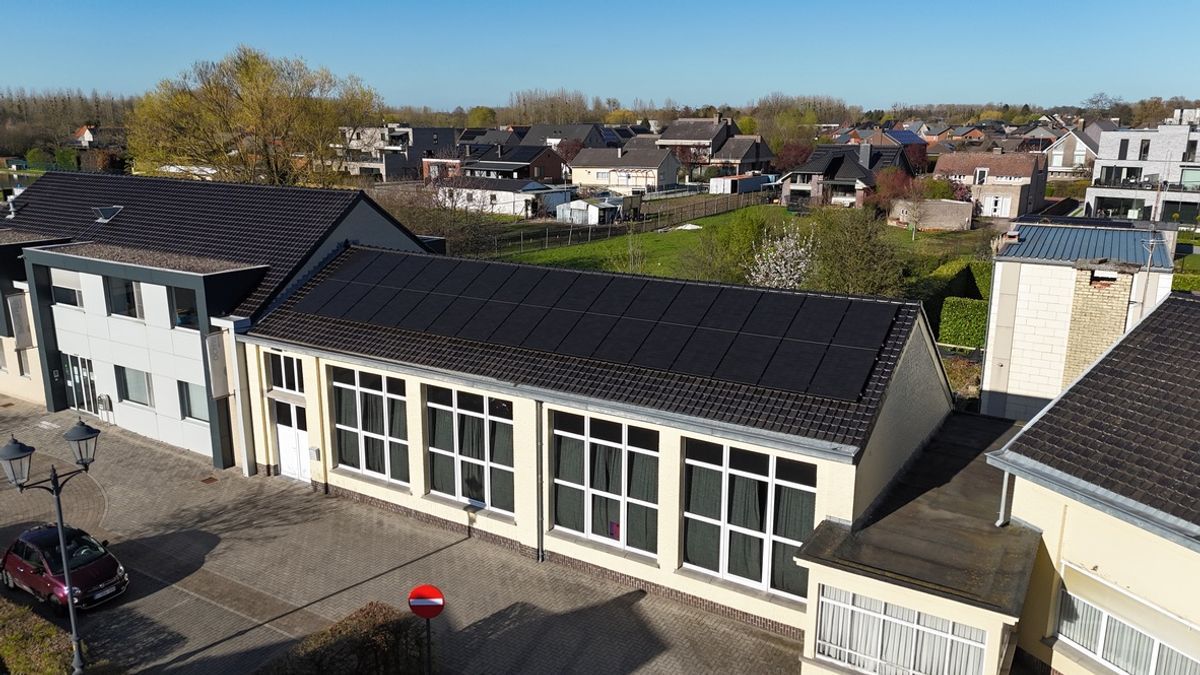
A solar panel turns light into electricity. The panel contains silicon. When light hits it, electrons start to move. This gives direct current. An inverter turns it into alternating current, the kind your sockets use. Without light there is no power, so at night a panel produces nothing. When it is cloudy, it still produces power, but less.
A panel makes electricity, not heat for your radiators. For hot water there is the solar water heater. That is a different device.
On a quote you will see three units:
| Unit | What it measures | Example |
|---|---|---|
| kW (kilowatt) | Power at one moment | A vacuum cleaner of 1.5 kW |
| kWh (kilowatt-hour) | Energy over a period | Your use per year |
| kWp (kilowatt-peak) | The maximum output of the system, measured in a test set-up | 4 kWp on the roof |
On your roof you rarely reach that peak. How many kWh you harvest per year depends on the direction of your roof, shade and weather.
What the digital meter changes
In the past, your meter ran backwards when the panels produced more than the house needed. In effect, you saved up kWh with the grid. This is called the backwards-running meter.
A digital meter does not do that. It counts the kWh you take and the kWh you inject separately. For what you inject, your energy supplier pays you a rate. That rate is usually lower than the price you pay for power from the grid.
According to Fluvius, if you had solar panels before 2021 (or registered them with Fluvius before 1 October 2021), you must have a digital meter fitted. Fluvius invites you to make an appointment. It takes about an hour. If you keep postponing the appointment, Fluvius registers you as a refusal. Contact Fluvius instead and agree a date.
What happens to your old balance?
Over the year, your meter may have run back more than forward. Fluvius calls this a negative balance. This is what Fluvius says about it:
- If the digital meter is fitted before 1 April 2026, Fluvius carries your balance over. It processes it in the opening readings. You see it on your bill, not on the meter.
- If the digital meter is fitted from 1 April 2026, you no longer get compensation for a negative balance. It is not settled.
Do not switch supplier, do not start energy sharing and do not change tariff before your next annual settlement. According to Fluvius, your balance can otherwise drop to zero. Read the Fluvius explanation for your situation.
Why self-consumption counts
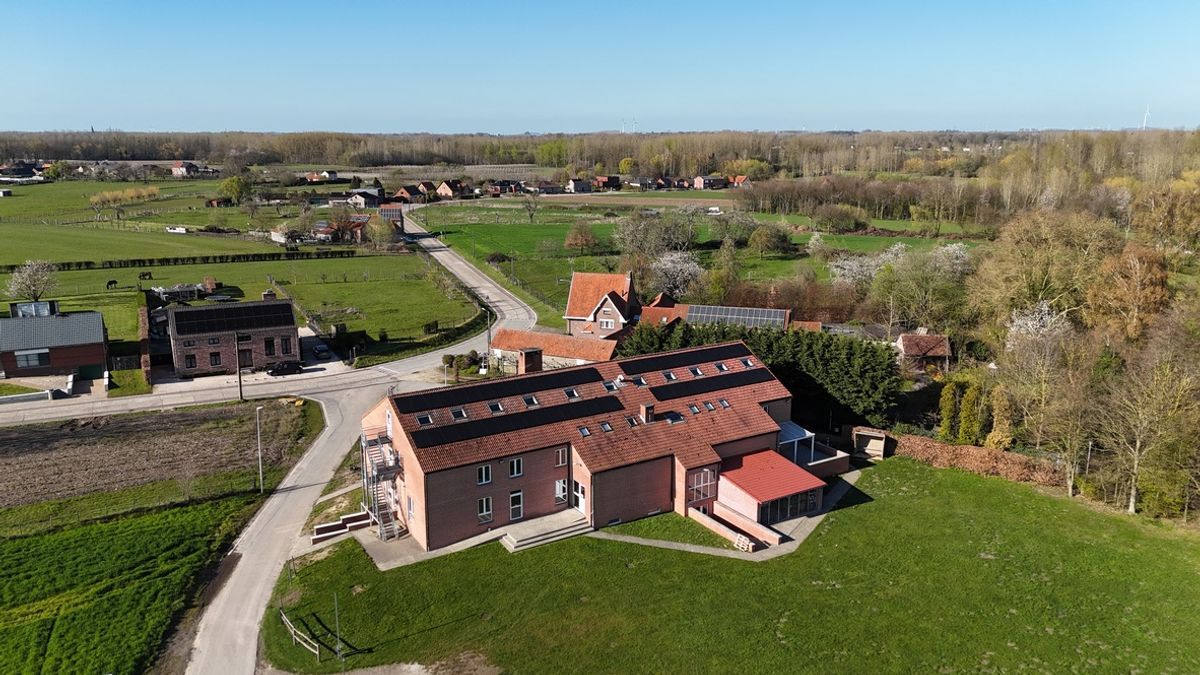
During the day, your panels often make more power than your home needs. The surplus goes to the grid. In the evening and in winter, you take power again. What you use yourself during the day, you do not have to buy. That earns more than injecting.
Worked example (for practice, not a real tariff)
Your panels produce 4,000 kWh per year. You pay €0.30 per kWh taken and receive €0.05 per kWh injected. If you use 30% yourself (1,200 kWh), you save 1,200 × 0.30 = €360 on power taken. Add 2,800 × 0.05 = €140 for injection. Together €500. If you use 60% yourself (2,400 kWh), that is 2,400 × 0.30 = €720 plus 1,600 × 0.05 = €80. Together €800. The same panels earn €300 more. The only difference is when you use your power.
This is how you raise your self-consumption:
- Run the washing machine, dishwasher or tumble dryer when the sun is out.
- Charge an electric car during the day, if you are at home.
- A heat pump helps mainly in spring and autumn. In winter, your panels make too little power.
- A home battery can shift a surplus to the evening. Whether that pays off depends on your use. The article on the home battery explains how to judge that.
Does your roof suit?
The Flemish Zonnekaart (solar map) gives a first idea of what your roof can yield. It is not a quote. Shade from a chimney, a tree or the neighbours' house can take off a lot.
A south-facing roof is best. An east and west roof can also work: output is then spread better over the day. A north-facing slope is usually less attractive.
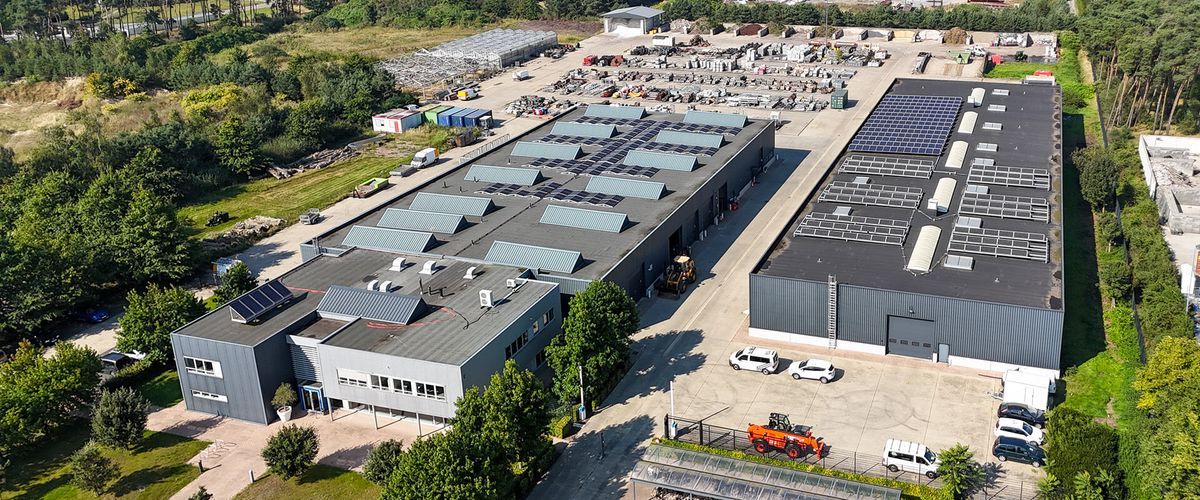
As a rule of thumb, installers in Flanders often count on about 850 to 1,000 kWh per kWp per year, depending on roof, shade and weather. A 4 kWp system then comes to about 3,400 to 4,000 kWh. That is a guide, not a promise. Ask your installer for an estimate for your own roof, with the assumptions.
If you have a lot of shade or a roof with many slopes, ask about micro-inverters or optimisers. With these, each panel works separately. One shaded panel then does not hold back the others. On a simple roof without shade, one inverter for all panels is usually enough. Have the choice explained on the quote.
Little use during the day? Then a bigger system is not better. You mostly inject, and that earns little.
Tenant, flat or no roof of your own
Are you renting? Then do not install anything without the owner's agreement. Agree in writing who pays what and who gets the benefit.
In a block of flats, the roof is shared. The owners' association decides.
If you have no suitable roof, you can sometimes join a collective project. That is a different route from panels on your own roof. The article on generating local energy together explains it.
What does it cost, and what support is there?
Grant. There is no Flemish grant for new solar panels any more. The retroactive grant for older systems could be applied for until 31 December 2025. It is now closed. For local support, ask your municipality or use the Premiezoeker (the Flemish government's search tool for grants). This support changes often.
VAT. On a home that is at least ten years old, the VAT rate for supply and fitting by the same firm is usually 6%. On a younger home or a new build, it is 21%. This is the usual rule for reduced VAT on renovation (see the FPS Finance page). The exact conditions depend on your situation. Have the rate written on the quote and, if in doubt, check with FPS Finance.
Loan. With Mijn VerbouwLening you borrow for work that saves energy, including solar panels. You borrow at least €4,000 and at most €60,000, over up to 25 years. For applications from 1 January 2026, the interest rate is 0%, 0.5% or 1.5%, depending on your income category. The Energiehuis (see "What now?") helps you with the application.
Payback time. We cannot give a fixed number of years. It depends on your use, your tariffs and your system. Ask the seller which power price, which self-consumption and which injection rate they used.
The capacity tariff (capaciteitstarief)
The capacity tariff is part of your grid costs. It depends on your highest peak of use: the most power you draw from the grid in one quarter of an hour. Each month, the highest quarter-hour peak counts. For the bill, the grid operator uses the average of the past twelve months.
- Only peaks in power taken count. Injection does not count.
- Everyone pays for a peak of at least 2.5 kW.
- According to the Vlaamse Nutsregulator (the Flemish regulator), the Flemish average for 2026 is about €53.39 per kW per year, excluding VAT. The amount differs by grid operator.
Panels do not lower that peak by themselves. If you cook in the evening, do a wash and a heat pump switches on, your peak can be high, even with a good roof. Spread heavy appliances over the day.
From quote to connection
Ask for at least two quotes with the same content. Have these points written on them:
- the output in kWp, the panel type and the inverter
- the warranty on the product and on yield
- the expected annual yield, with the assumptions
- the shade study
- the cost of scaffolding and cabling
- the inspection and the registration with Fluvius
- the VAT rate
- what happens if the inverter fails, for example after ten years
- whether monitoring (an app that shows your output) is included
A low price that leaves out scaffolding or inspection is not a bargain.
After fitting, an approved inspection body must inspect the system under the AREI (the Belgian General Regulations on Electrical Installations). The system must also be registered with Fluvius. The installer usually arranges this. Ask them to note it on the quote.
Adding a heat pump or a charging point
A heat pump needs a lot of power in winter, just when your panels make little. Panels do help in the other seasons. So do not count on a winter without grid power.
A charging point goes well with panels if you can charge at home during the day. If you charge only at night, the panels do not help.
Insulate first. The less heat your home needs, the smaller and cheaper the systems you choose later. The articles on the heat pump, electric charging and the home battery go deeper into each of these steps.
Frequently asked questions
Do I have to switch energy supplier for a better injection rate? Not necessarily. Look at the rate for power taken and for injection together. A high injection rate with an expensive price for power taken can cost more overall.
What about hail or storms? Good panels are tested against hail, but nothing is unbreakable. Ask your insurer whether the panels are covered, and ask the installer what they guarantee. Photos of the system after fitting help with a damage claim.
Do I need to add a battery straight away? No. First look at how much you inject during the day and how much you take in the evening. The article on the home battery helps you with that.
What now?
- Write down your annual use in kWh. Look at your last annual bill.
- Look at your roof on the Zonnekaart and check where shade falls.
- Ask for two quotes with the same content and compare them side by side.
- Do you already have panels and are you waiting for the digital meter? Read the Fluvius explanation about your balance before you switch supplier.
You get free help with your home, grants and loan from Energiehuis Limburg. Call 089 77 81 29 or make an appointment at your municipality's home energy desk (woonenergieloket).
Sources and disclaimer
This article is based on these sources: Zonnekaart, Fluvius on the digital meter, Fluvius on the retroactive grant, Mijn VerbouwLening, capacity tariff, renovation VAT and Energiehuis Limburg.
Disclaimer: General information, not personal advice or a quote. Grants, VAT and tariffs change. As of 30 October 2026.
Author: Wouter Hermans
Stay up to date with Bronsgroen
Once a month, news about our projects in Limburg, our activities and how you can take part. You can unsubscribe at any time.