Mining and oil: what electric and fossil-fuel cars take from the ground
In short
An electric car carries, once, about 140 to 250 kg of metal and graphite. A petrol car burns about 12.8 tonnes of fuel in its lifetime in the central case (8.2 to 13.5 tonnes of petrol or 7.9 to 12.7 tonnes of diesel depending on the assumptions; a model calculation). That is 32 to 95 times the mass of those materials. The metals remain and can be reused. The fuel disappears as exhaust gas. The harm from mining is documented: child labour in Congo, pollution and coal power at Indonesian nickel. The harm from oil is documented too. Both chains depend on few countries. Some comparisons do not work one to one.
What you often hear: what is true?
| What you hear | Is it true? | Why |
|---|---|---|
| "A battery means digging up a mountain, oil does not." | False | Oil also needs drilling, pipelines and refineries. A car burns tens of times more fuel by mass than it holds battery metal, although mass does not tell the whole story about harm. |
| "Cobalt mines in Congo make electric cars unethical." | Partly true | The abuses are documented. But many batteries hold little or no cobalt, and the oil sector also has documented victims. |
| "Batteries cannot be recycled." | False | A plant in Hoboken (Antwerp) recycles them on an industrial scale. Volumes are still small, because car batteries last a long time. |
| "The heavy metals in batteries poison the environment." | It depends | Collected batteries keep the metals in the loop. The risk lies with batteries that are dumped, burned or badly recycled. |
| "Electric cars catch fire more often." | It depends | Swedish fire service data show no higher rate of fires per car for electric and hybrid cars, but the count is small and not systematic, so too weak for a fixed figure. |
| "Oil is a finite throwaway resource, metals are not." | Partly true | Fuel is gone after use, metal is not. But demand grows so fast that recycling will cover, at most, part of the new demand until 2050. |
How much material, how much oil?
The calculation applies per car, over its whole life. The assumptions are listed, so that you can adjust them.
Battery. Researchers from Leiden University and the American Argonne National Laboratory (Xu and colleagues, Communications Materials, 2020) used the American BatPaC model to calculate the make-up of a mid-size electric car. The battery has 66 kWh. For a nickel-rich NMC battery (nickel, manganese, cobalt), the result is:
- lithium: 7.5 kg
- nickel: 44 kg
- cobalt: 5.6 kg
- manganese: 5.2 kg
- graphite: 47 kg
- copper: 49 kg
Together that is about 158 kg. Aluminium comes on top (about 79 kg), which makes about 237 kg in total. We leave out the silicon in the anode (4.6 kg). An LFP battery (lithium iron phosphate) holds no nickel, cobalt or manganese. It does hold more graphite (79 kg), copper (56 kg) and aluminium (107 kg), plus 6.6 kg of lithium. That is about 140 kg without aluminium and 250 kg with it. These are model figures for American car classes. A smaller European battery holds less.
Fuel. We calculate for a petrol car. Where possible, the figures come from Belgian sources. Step by step:
- Kilometres per year: 14,172. This is the average per passenger car in Belgium in 2025, measured from two odometer readings 6 to 18 months apart (Car-Pass, annual report 2025, p. 18).
- Lifetime: 17.6 years. The cars that Febelauto (the Belgian end-of-life vehicle recycling body) has collected since 2001 were 17.6 years old on average when scrapped (press release of January 2023, via Brussels Times).
- Kilometres in a car's life. 14,172 km × 17.6 years is about 249,400 km. Assumption: the car drives the same distance every year. In reality, young cars drive more (Car-Pass, p. 18). A cross-check with that age curve gives about 241,000 km, 3% less.
- Consumption: 6.9 litres per 100 km. This is the real-world consumption of a medium-size petrol car in the EU (ICCT, 2025). The test value is 5.7 litres. On-board fuel meters in 2.9 million vehicles sold show 20% more in real driving. Assumption: this EU average also holds for Belgium. No Belgian figure was found.
- Litres. 249,427 km ÷ 100 × 6.9 litres is 17,210 litres, or 978 litres a year.
- Kilograms. Petrol weighs 0.745 kg per litre (JEC, reference value for EU fuel). 17,210 litres × 0.745 kg is 12,822 kg, about 12.8 tonnes.
Range. The low assumption uses 10,976 km a year. That is 107,127 km divided by 9.76 years, the averages of used cars with a Car-Pass in 2025 (p. 5; on p. 12 of the same report the figures are 107,027 km and 9.8 years). This figure probably understates the average over a whole car life, because it mixes cars of all ages and ignores the long distances of the first years. With 17.6 years and the test value of 5.7 litres, that gives 193,180 km, 11,011 litres and 8.2 tonnes. The high assumption uses 18.5 years, the average age of Belgian scrapped cars in 2022 (Febelauto, via ICCT), with 14,172 km a year and 6.9 litres. That gives 262,182 km, 18,091 litres and 13.5 tonnes. For diesel (4.9 litres test value and 5.8 litres real-world per 100 km, 0.832 kg per litre), the range runs from 7.9 to 12.7 tonnes. In the central case it is 12.0 tonnes.
Result. The materials in the battery weigh 142 to 249 kg (NMC and LFP, with and without aluminium). A petrol car burns 12,822 kg in the central case. That is 52 to 90 times as much (12,822 ÷ 248.66 and 12,822 ÷ 141.79). Across all three assumptions and both fuels (7.9 to 13.5 tonnes), it is 32 to 95 times. The difference lies mainly in what happens afterwards. The metals are still in the battery. The fuel has gone as CO2, water vapour and exhaust gas. The article "Electric, petrol, diesel or hydrogen: which pollutes more?" shows how much CO2 each type of car emits in total.
The chart sets the mass of battery material next to the mass of fuel, for a low, a central and a high assumption. However you calculate, the fuel weighs many times more.
Raw materials: battery or fuel?
How much metal is in a car battery, next to how much fuel a petrol or diesel car burns in its life.
The area of each square is proportional to the mass.
Over its whole life a car burns 32 to 95 times more fuel than a battery holds in metals.
Recycling: a potential, not a result
European rules set recyclers targets for recovering metals by the end of 2031: cobalt 95%, copper 95%, nickel 95%, lithium 80%. These are targets. They say nothing about what is recovered today.
Sources
- Xu, Dai, Gaines, Hu, Tukker, Steubing, Future material demand for automotive lithium-based batteries. Communications Materials 1, 99 (opens in a new tab) (2020 ) academic
- Xu et al., Future material demand for automotive lithium-based batteries: Supplementary Information (opens in a new tab) (2020 ) academic
- Car-Pass, Rapport annuel 2025 (opens in a new tab) (2025 ) primary source
- ICCT, Life-cycle greenhouse gas emissions from passenger cars in the European Union: a 2025 update (opens in a new tab) (2025 ) advocacy group
- JEC (JRC, CONCAWE, EUCAR), Well-to-Tank Appendix 1: Conversion factors and fuel properties, version 4.0 (EUR 26028 EN) (opens in a new tab) (2013 ) primary source
- European Commission, DG Environment, New rules to boost recycling efficiency from waste batteries (opens in a new tab) (2025 ) primary source
Our own diagram, based on Xu et al. (2020), Car-Pass (2025), the ICCT (2025) and JEC; the fuel figures are our own calculation.
Show the figures as a table
| Item | Mass (kg) |
|---|---|
| Petrol (low scenario) | 8,203 |
| Petrol (central scenario) | 12,822 |
| Petrol (high scenario) | 13,477 |
| Diesel (low scenario) | 7,876 |
| Diesel (central scenario) | 12,036 |
| Diesel (high scenario) | 12,652 |
| NMC811 battery (metals) | 158 |
| NMC811 battery (metals with aluminium) | 237 |
| LFP battery (metals) | 142 |
| LFP battery (metals with aluminium) | 249 |
What is reused, what is burned?
The European rules are strict on paper. Regulation (EU) 2023/1542 (the EU Battery Regulation, article 71 and annex XII) requires recyclers of lithium-based batteries to reach a recycling efficiency of 65% by the end of 2025 and 70% by the end of 2030. For cobalt, copper, lead and nickel they must recover 90% by the end of 2027 and 95% by the end of 2031. For lithium it is 50% in 2027 and 80% in 2031. From 18 August 2031, a new car battery must hold at least 16% recycled cobalt, 6% recycled lithium and 6% recycled nickel (article 8). These are obligations, not a measure of what happens today.
Umicore in Hoboken (Antwerp) has used a smelter for rechargeable batteries since 2011, with a capacity of 7,000 tonnes. The company says it recovers more than 95% of the nickel, copper and cobalt. For lithium it states more than 80% on one page and more than 90% on another. These are the company's own claims, not independent measurements. No figure was found for graphite.
So the bottleneck is mainly volume. Car batteries last a long time and often get a second life. According to Xu and colleagues, in the best case recycling can cover 20 to 23% of total lithium demand until 2050, 26 to 44% of cobalt and 22 to 38% of nickel, because the fleet still has to grow. For now, most of the metal therefore comes from new mines.
What mining does
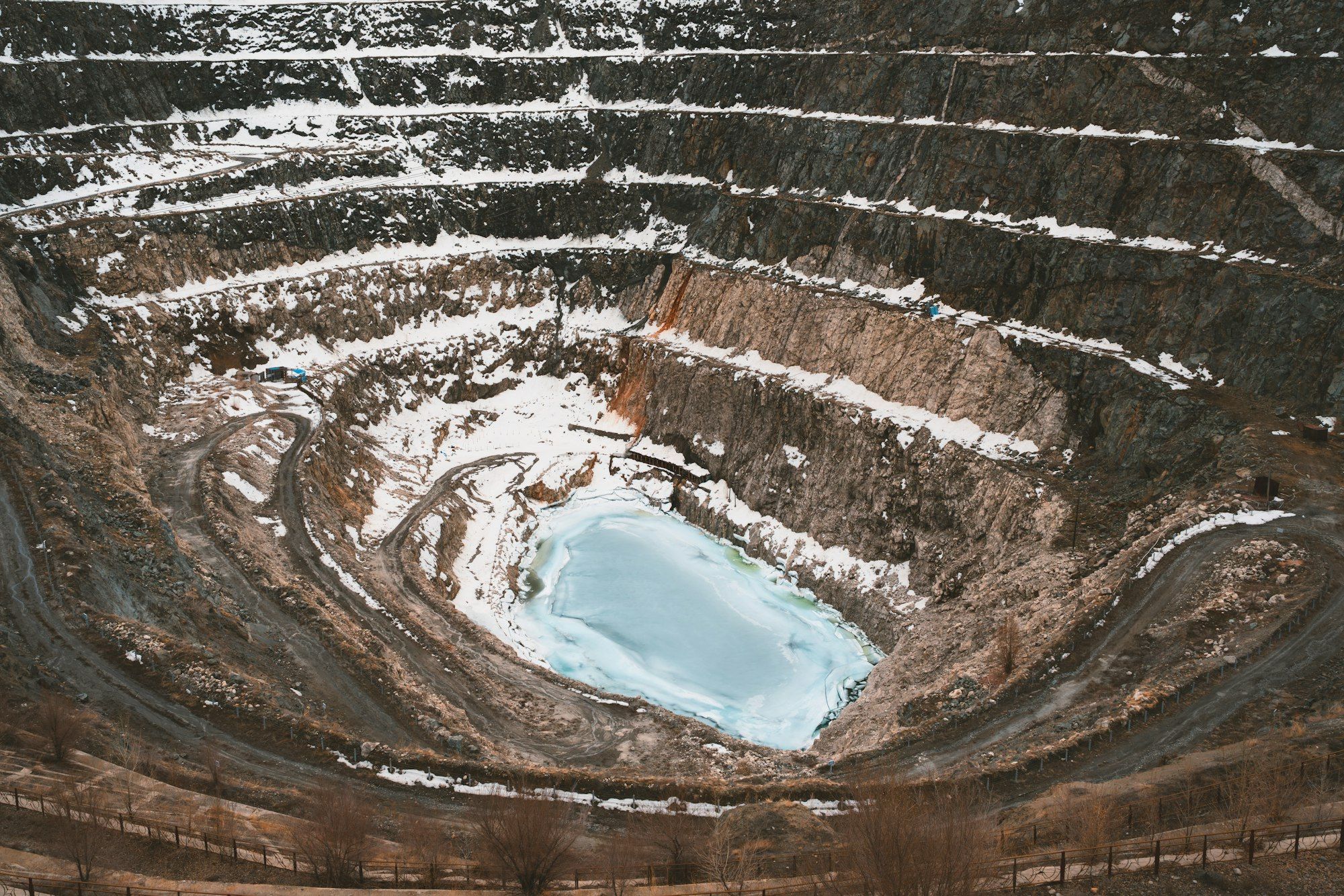
Cobalt in Congo. The Democratic Republic of the Congo supplied 73% of mined cobalt in 2025, according to the US Geological Survey (USGS). Amnesty International and the NGO Afrewatch documented child labour in artisanal mines in 2016. Children told Amnesty that they worked twelve hours a day and earned one to two dollars a day. Media reports between September 2014 and December 2015 recorded fatal accidents involving more than 80 artisanal miners. According to Amnesty, the real number is probably much higher. The US Department of Labor lists cobalt ore from Congo among goods produced with child labour or forced labour.
Artisanal mining is a minority, and its share varies. According to the IISD (a research institute), based on Gulley (2023), that share was about 50% of Congolese production around 2008 and about 10% around 2020. In 2016 Amnesty cited an estimate from the Congolese government: 20% of cobalt exports. Problems are also described at industrial mines. In 2023, Amnesty and the Congolese NGO IBGDH described violations of legal safeguards in forced evictions around Kolwezi.
Lithium. According to the USGS, Australia supplied 92,000 tonnes in 2025, China 62,000, Chile 56,000 and Argentina 23,000. In the Chilean Atacama desert, lithium is extracted from brine. A study in Proceedings of the Royal Society B (2022) found a link between mining in the Salar de Atacama and fewer flamingos of two of the three species. Across the whole region, the researchers saw no clear downward trend. How much fresh water mining costs exactly is disputed. A study in Water (2025) estimates that the extra evaporation from mining is at most 4% of evaporation in the whole basin. The authors do not count the total use of all users and point to uncertainty in the models. No verifiable figure was found for water use per tonne of lithium.
Nickel in Indonesia. Indonesia supplied about two thirds of the world's nickel in 2025 (2.6 of 3.9 million tonnes, USGS). Part of it goes into batteries, part into stainless steel. In 2025 the NGO Climate Rights International interviewed 93 people around mines and smelters. The interviewees reported polluted air and water, health complaints and land seizure. According to the NGO, coal-fired power plants at nickel projects have 11.6 GW of capacity, with another 5.5 GW under construction. That is an advocacy group. No independent confirmation of these figures was found.
What oil does
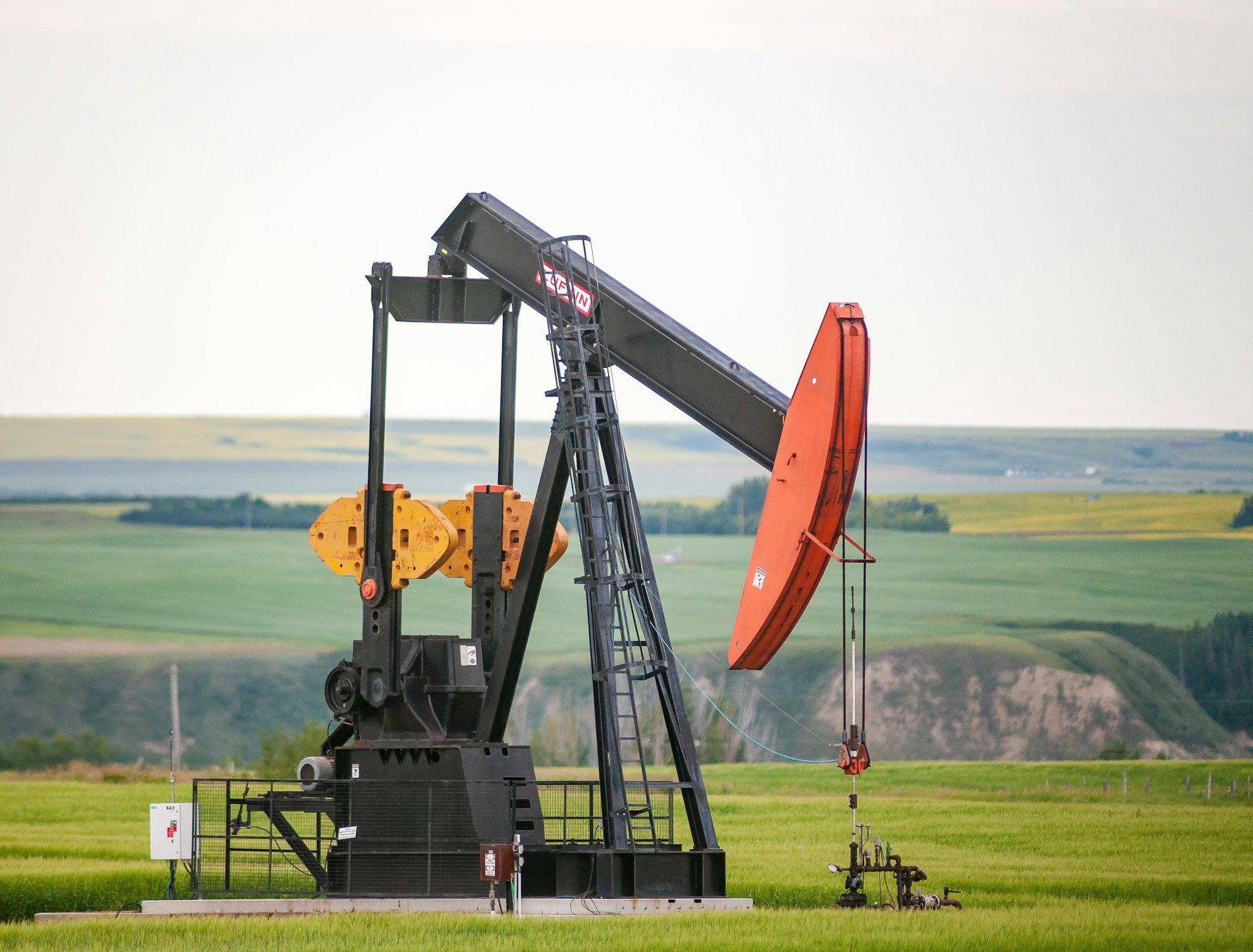
Niger Delta. The United Nations Environment Programme (UNEP) studied Ogoniland in 2011, after more than 50 years of oil activity. In one village, families drank water from wells with benzene at more than 900 times the guideline value of the World Health Organization (WHO). According to press releases about the report, the clean-up could take up to 30 years.
Platform disasters. The Deepwater Horizon explosion in 2010 killed 11 workers. Millions of barrels of oil ended up in the Gulf of Mexico, according to NOAA (the US ocean and atmosphere agency).
Flaring and methane. According to the World Bank, 167 billion m³ of gas was flared worldwide in 2025 (burned at the production site). That equals 429 million tonnes of CO2 equivalent. The International Energy Agency (IEA) puts methane emissions from the oil sector in 2025 at about 45 million tonnes.
Tar sands. In Alberta, the tailings ponds of the tar sands mines hold 1.5 billion m³ of liquid sludge (Alberta Energy Regulator, figures for 2023). That oil does not necessarily reach the Belgian pump: in 2025 the EU got its oil mainly from the US, Norway and Kazakhstan, according to Eurostat.
Air pollution. The European Environment Agency (EEA) attributes more than 180,000 deaths in the EU in 2023 to fine particulate matter above the WHO guideline value. Traffic is only one source of that, alongside heating, among others.
Heavy metals and fire
Heavy metals. An NMC battery holds nickel, cobalt and manganese (see above). An LFP battery does not. A petrol or diesel car has a lead battery. The EU rules also require recycled lead for it. The danger is not in the metals themselves, but in where they end up. Laboratory tests (including a US doctoral thesis) found cobalt, copper and nickel in the leachate of dumped lithium batteries. Measurements at real landfill sites were not found. The evidence is thin, but the advice is clear: never put batteries in the general waste and do not let them end up in the environment.
Fire. In 2024 the Swedish government agency MSB counted 40 fires in electric and hybrid cars that the fire service attended. The fleet had 880,958 vehicles (mostly plug-in hybrids). That is about 4.5 per 100,000. All 4.98 million Swedish cars together had more than 3,100 fires, about 62 per 100,000. Caveats: MSB finds the electric fires by searching free text and does not itself call this a systematic statistic. Deliberate fires are not counted for electric cars, but are in the total. The electric fleet is also younger (a note from the editors, not from MSB). MSB points out that firefighters face toxic smoke in battery fires. A battery fire therefore seems rarer, but not harmless. This count is too weak for a firm figure.
Who holds the key?
For batteries, the concentration lies mainly in processing. According to the IEA (Global Critical Minerals Outlook 2026), the largest refining country held an average of 72% of the market in 2025, excluding rare earths. According to the same table, China refines about 71% of lithium and 94% of graphite. According to the USGS, China is also the largest cobalt refiner and the producer of 82% of natural graphite. Chinese export controls on battery materials add a further risk, according to the IEA. According to the IEA, some measures were suspended until November 2026.
For oil, the dependence lies in imports. According to Eurostat, the EU imported 97.6% of its oil in 2022. Russia's share fell from about 26% at the start of 2022 to about 1.4% in the last quarter of 2025 (Eurostat, quoted by Eunews). About 25% of world seaborne oil trade passes through the Strait of Hormuz (IEA, February 2026). A conflict in the region since 28 February 2026 disrupted that flow for months. The IEA calls this the largest supply disruption in the history of the oil market. Oil is one world market, so such a disruption can also affect Belgian pump prices.
With fuel, that dependence continues.
Where the industry is changing
- Cobalt-free. According to the IEA, LFP (iron phosphate, without nickel or cobalt) made up 55% of the batteries for electric cars sold worldwide in 2025, and 80% in China. The downside: more graphite, copper and aluminium per kWh (see Xu and colleagues above).
- Sodium-ion. In February 2026, CATL and Changan showed a passenger car with a sodium-ion battery and planned the market launch for mid-2026. The IEA writes that 2026 could be a turning point. Whether sales have really started is not confirmed.
- Battery passport. According to article 77, the regulation requires a digital passport for car batteries from 18 February 2027, including the composition. No decision was found that postpones that date. The mandatory checks on the origin of raw materials have been postponed to 18 August 2027 (Regulation (EU) 2025/1561).
What cannot be compared one to one
- One-off versus continuous: a battery is made once, fuel is extracted every year.
- Rock versus metal: the mine moves far more than the metal in the car.
- Different years and methods: the data on Congo, Indonesia and Nigeria come from different years and measurement methods. Do not add them up.
- Electricity: it has a source too, which is not counted here.
What now?
- When you buy, ask for the battery type and capacity. NMC or LFP, and how many kWh. A smaller battery means less material.
- Ask what happens to the battery after use. A seller must be able to explain it. Never put an old battery in the general waste. Take it to a collection point.
- Check a claim on three points before you share it. Per car or in total? Which year? Which source?
Sources and disclaimer
Figures as of 30 October 2026. Advocacy groups and companies are labelled as such.
- Xu and colleagues, Communications Materials 2020: future material demand for car batteries and supplementary information (tables 1 and 23)
- USGS Mineral Commodity Summaries 2026: cobalt, lithium, nickel, graphite
- European Commission: recycling targets and mandatory recycled content (article 8); legal text 2023/1542 (articles 8, 71 and 77, annexes XII and XIII) and amending regulation 2025/1561
- Umicore: battery recycling (company)
- Amnesty International, 2016: cobalt in Congo and 2023: forced evictions (NGO)
- US Department of Labor: Congo
- IISD: cobalt profile 2026
- Gutiérrez and colleagues, Proceedings of the Royal Society B 2022: flamingos and lithium and Water 2025: water balance of lithium extraction in the Atacama
- Climate Rights International, 2025: nickel in Indonesia (NGO)
- UNEP: Ogoniland and NOAA: Deepwater Horizon
- World Bank: Global Gas Flaring Tracker 2026, IEA: Global Methane Tracker 2026, Alberta Energy Regulator, 2023
- EEA: air quality and deaths
- MSB (Sweden): fires in electric vehicles 2018 to 2024
- Clemson University doctoral thesis: leaching from lithium batteries
- IEA: Global Critical Minerals Outlook 2026 (revised version of July 2026), IEA: Strait of Hormuz
- Eurostat: oil imports in 2025, dependence in 2022 and Russia's share, via Eunews
- Car-Pass annual report 2025 (pages 5, 12 and 18) and Brussels Times: Febelauto
- ICCT: life-cycle greenhouse gas emissions from passenger cars in the EU, 2025 update (think tank, tables 3 and 4)
- JEC: Well-to-Tank, appendix 1, version 4.0 (2013) (fuel densities)
- CnEVPost: sodium-ion (trade press)
This is general information, not personal advice. Position as of 30 October 2026.
Author: Wouter Hermans
Stay up to date with Bronsgroen
Once a month, news about our projects in Limburg, our activities and how you can take part. You can unsubscribe at any time.